
BTC & XRP Dominate Crypto Trading As Korean Stock Market Crashes—Is Smart Money Rotating to Crypto?


Highlights
- Upbit volume exploded 1,426% to $4.27B on July 14, 2026, as the KOSPI fell 4% intraday and circuit breakers fired multiple times.
- BTC and XRP led the surge, accounting for nearly 20% of all trades as 1.2 million leveraged Korean retail accounts hit margin calls.
- Korea's "F4" regulators activated emergency stabilization measures while analysts debate rotation into crypto versus panic selling.
South Korea’s Upbit volume exploded on July 14, 2026, surging 1,426% to $4.27 billion as the country’s equity markets buckled under one of their worst single-day selloffs in years. Bitcoin (BTC) and XRP led the charge, together accounting for nearly 20% of all trades on the platform as retail investors fled collapsing stocks.


KOSPI Crash Ignites $4.27B Surge in Upbit Volume
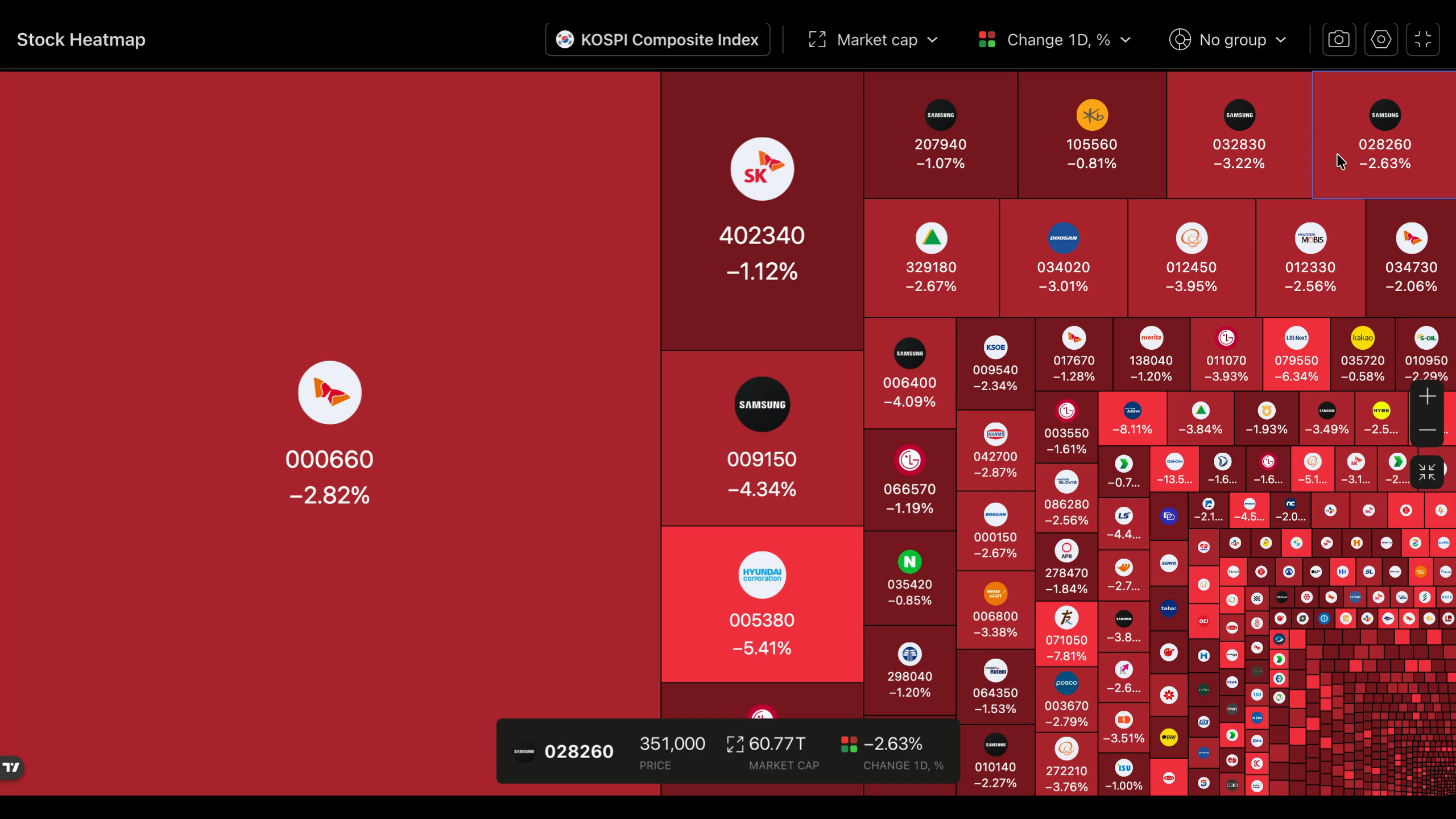
The KOSPI fell 4% intraday to 6,534.34 before recovering to close down around 2%. The tech-heavy KOSDAQ dropped nearly 4%, and circuit breakers fired multiple times throughout the session. SK Hynix tumbled 3.52% after sliding 15% in the prior session. Broader Asian markets weakened in tandem, with Taiwan’s TAIEX dropping 1.93%.
Korea’s Hankyung newspaper reported that forced liquidations in unsettled stock positions hit KRW 425.8 billion (~$286M) between July 1 and 10. Over 320,000 retail margin accounts faced calls during that stretch, exactly the kind of panic that historically pushes sidelined capital into alternative assets.
That capital appears to have moved, at least in part, to crypto. CoinGecko data confirmed Upbit volume hitting $4.27B on the day, corroborated by crypto journalist Wu Blockchain. BTC/KRW logged $56.84M in volume, while XRP/KRW posted $46.93M, both pairs with deep order books and tight spreads.
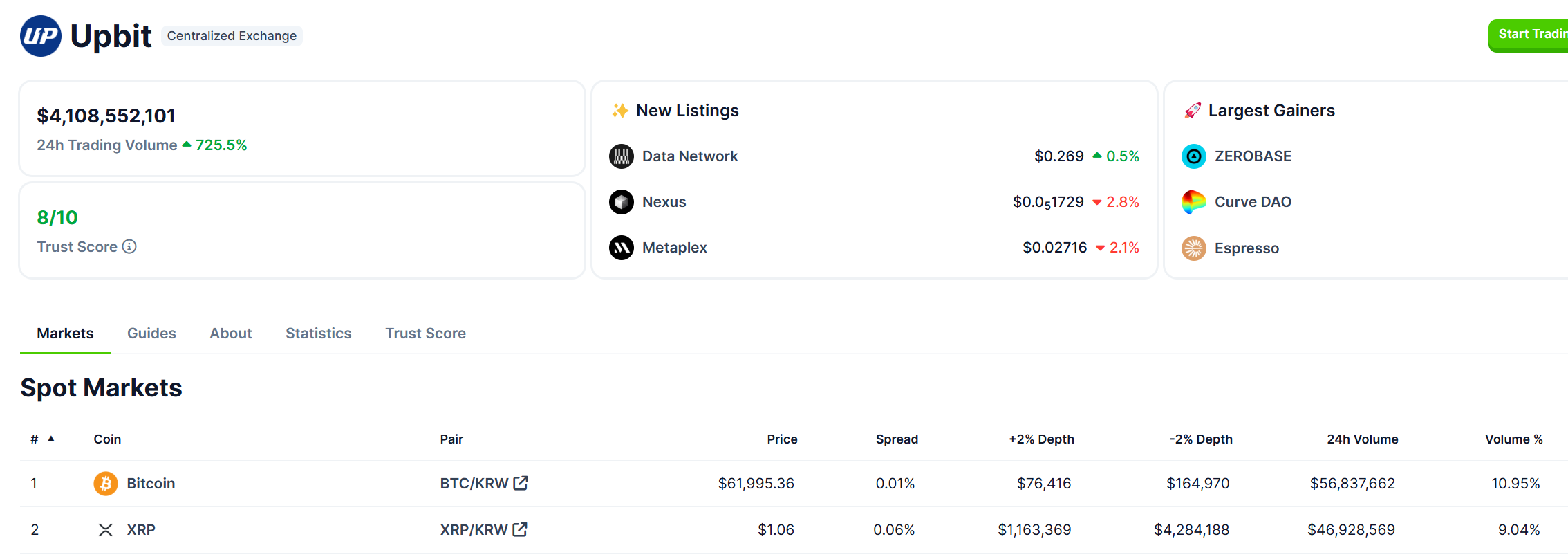
This pattern echoes a report from last year when XRP dominated Upbit trading with over $1.22B in a single session, outpacing BTC and ETH, a sign that Korean retail investors maintain deep loyalty to both assets regardless of market conditions.


Capital Rotation or Panic Buy? What the Volume Says
The scale of the margin call crisis adds weight to the rotation theory. According to Korea’s Financial Supervisory Service, 1.2 million leveraged retail accounts triggered margin calls as of July 13, roughly 1 in every 30 working-age adults in South Korea.
Between 320,000 and 360,000 of those accounts were fully liquidated by brokers, with some retail holders now owing money to their brokerage.
The crypto community on X moved fast to frame the Upbit volume surge. A crypto analyst on X captured the sentiment bluntly; she noted that the top five traded assets on Upbit were not speculative altcoins but liquidity staples: BTC, XRP, USDT, ETH, and XEC.
Sometimes I catch myself thinking that Korean retail might be one of crypto's most underrated movers.
When the Korean stock market goes on an insane rally and crypto suddenly loses steam
Today, that theory just got its best evidence yet.
KOSPI is freefalling — down 4% in a… pic.twitter.com/vj1re0mxvH
— LazyCat|猫姐🎒 (@Crypto_Cat888) July 14, 2026
Market analyst Nicholas Mugalli offered a more structural read. He pointed out that the KOSPI rout was the direct unraveling of an overcrowded, over-leveraged AI trade, with two chipmakers representing half the index, and retail piled into single-stock leveraged ETFs.
Crucially, Mugalli noted that the Korean government activated its full “F4” stabilization mechanism, the Finance Ministry, central bank, FSC, and FSS, and summoned the CEOs of the ten largest securities houses for emergency talks.
🇰🇷 Korea just activated the sidecar program selling halted on the KOSDAQ. SK Hynix down 4% more, off 21% in two days…I’ve been telling saying this for weeks what this was, the most crowded, most levered expression of the AI trade anywhere on earth, finally unwinding (bullish).… https://t.co/vO36NtGOwx pic.twitter.com/d8RK7XkYwX
— Nicholas Mugalli (@RealNickMugalli) July 14, 2026
The picture sharpens further when you look at where domestic money went inside traditional markets. While foreign investors aggressively sold AI hardware stocks and hedged via futures, Korean institutions and retail rotated heavily into clean energy, biopharma, and construction.
The KOSDAQ, which actually closed higher in one session during the volatility, saw EV battery and biotech names surge as much as 23%. Analysts are split: one camp says this is a crack in the AI narrative and smart money is reducing exposure.
The other argues the AI memory trade isn’t broken; it simply got over-leveraged in one country, and margin calls did the rest.
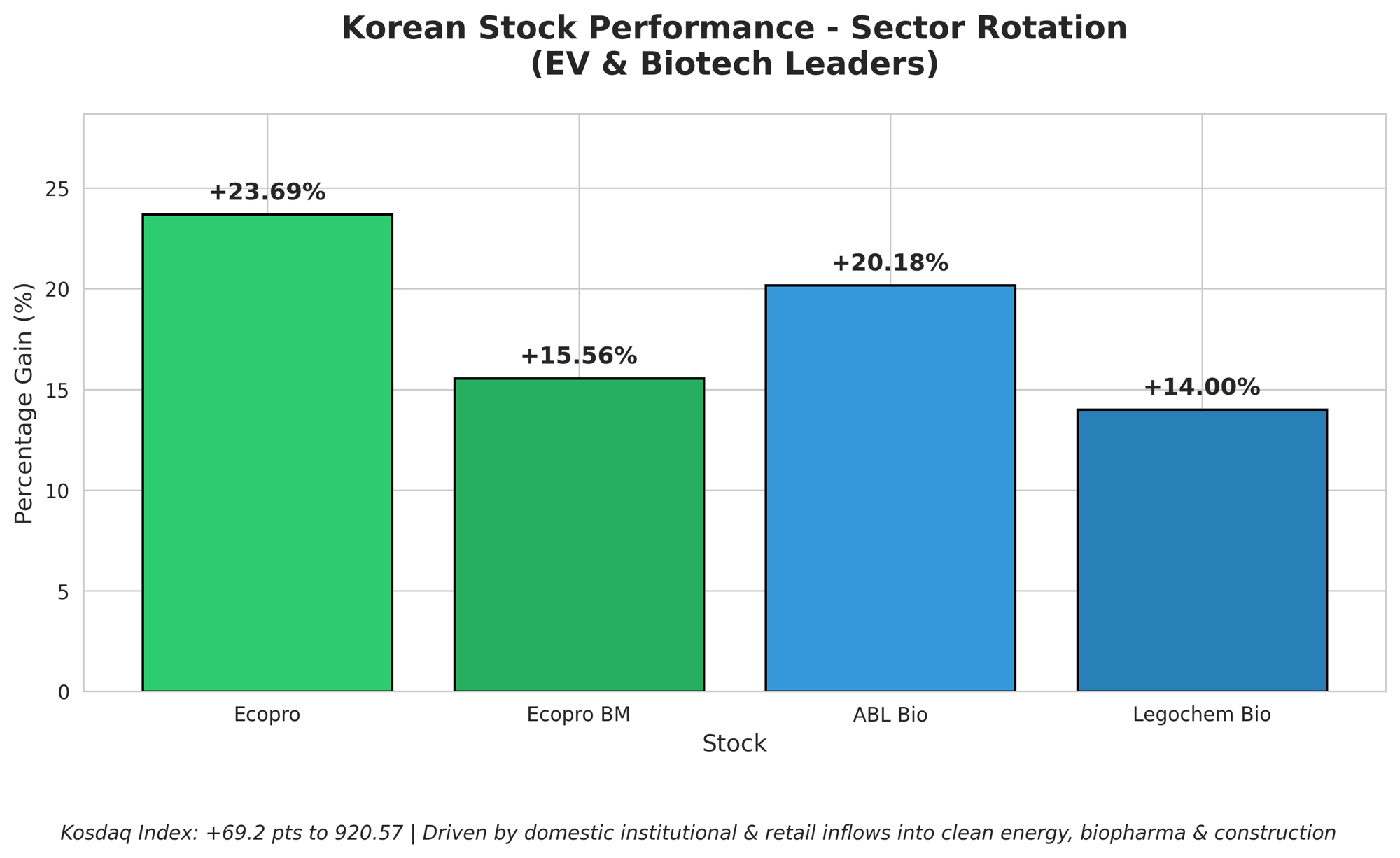
Domestic institutions and retail investors moved in the opposite direction, absorbing equity selling and rotating into clean energy, biopharma, and construction. EV stocks led the charge: Ecopro surged 23.69% and Ecopro BM rose 15.56%. Biotech names ABL Bio (+20.18%) and Legochem Bio (+14%) also spiked. Kosdaq closed up 69.2 points to 920.57 on the session, driven by domestic inflows.
However, South Korea has the structural groundwork for a more lasting shift to the crypto sector. The government has eased rules on corporate crypto investment, and a spot Bitcoin ETF launch is confirmed for 2026.
Those moves lower the barrier for institutional capital to follow retail into crypto markets. However, South Korea is also tightening FX controls on crypto transfers starting December 2026, which could complicate large cross-border flows if volumes sustain.
Track active ICOs and upcoming token sales in one place.
Instant Currency Exchange at BestChange with Ease
- Compare Rates Across 1000+ Exchanges
- Access 250+ Cryptocurrencies & Pairs
- Save Time with Real-Time Price Tracking
- Trusted & Verified Exchange Listings

Why Trust CoinGape
CoinGape has covered the cryptocurrency industry since 2017, aiming to provide informative insights Read more… to our readers. Our journal analysts bring years of experience in market analysis and blockchain technology to ensure factual accuracy and balanced reporting. By following our Editorial Policy, our writers verify every source, fact-check each story, rely on reputable sources, and attribute quotes and media correctly. We also follow a rigorous Review Methodology when evaluating exchanges and tools. From emerging blockchain projects and coin launches to industry events and technical developments, we cover all facets of the digital asset space with unwavering commitment to timely, relevant information.



Delivered every day.
- Insights that move markets
- 100,000 active subscribers

CRYPTO IMPACT AWARDS 2026