Claim Reward
Buy

How to Convert Tether to Monero (USDT to XMR): Secure and Private Methods in 2026

  • 2 Million+ Readers
  • Verified Unbiased Projects
  • Reviewed By Crypto Experts
  • 2 Million+ Readers
  • Verified Unbiased Projects
  • Reviewed By Crypto Experts

CoinGape has been covering cryptocurrency and blockchain markets since 2017. Our editorial team evaluates projects and platforms using structured review frameworks focused on transparency, utility, and risk assessment. You can explore our review methodologies to see how we assess and rate different categories. We maintain clear editorial standards and disclose advertising or affiliate relationships where applicable.

Investment disclaimer
The content reflects the author's personal views and current market conditions. Please conduct your own research before investing in cryptocurrencies, as neither the author nor the publication is responsible for any financial losses.
Ad Disclosure
This site may feature sponsored content and affiliate links, To get more information on the partner link placements visit our affiliate policy page . All advertisements are clearly labeled, and ad partners have no influence over our editorial content.

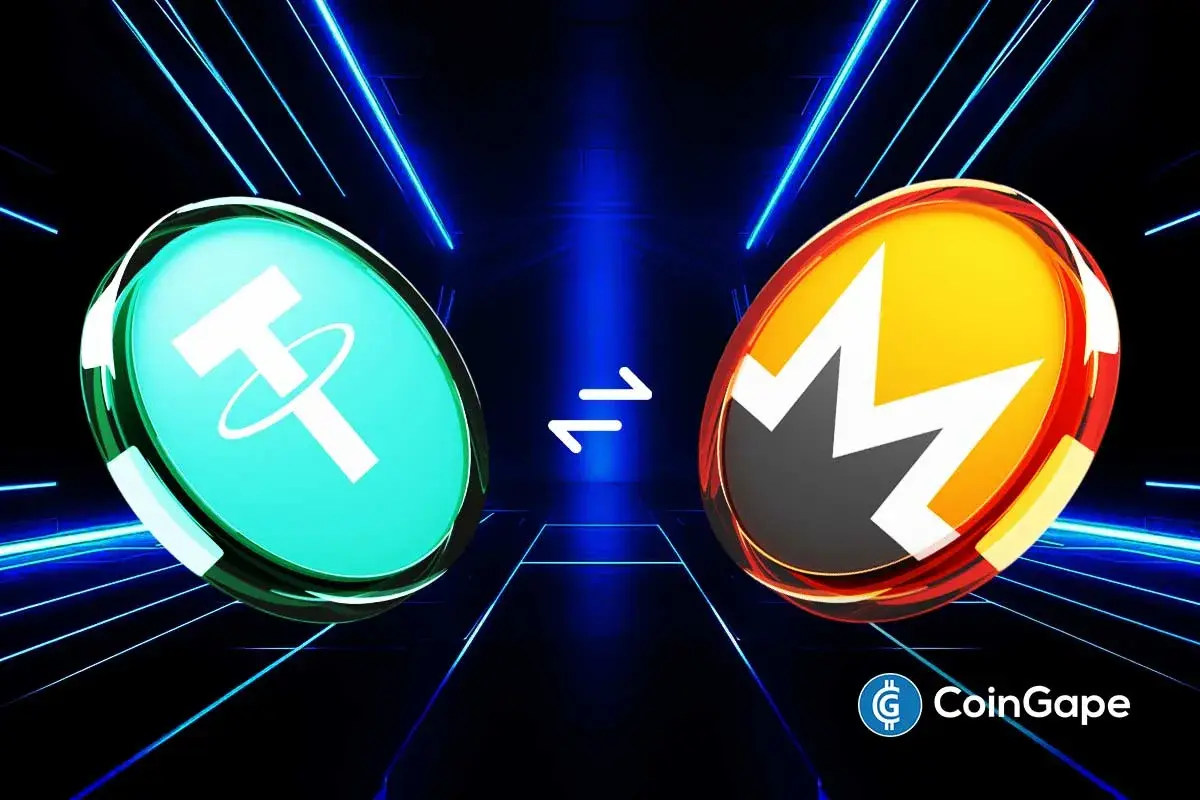
Investors focused on privacy are transitioning from Tether (USDT) to Monero (XMR) in 2026 as XMR has positioned itself as one of the strongest privacy-protected tokens in the market. Not to mention, the token lets users retain control while minimizing on-chain exposure.

In this guide, we will cover topics like why swapping from USDT to XMR makes sense, how exchange rates works, the safest and fastest methods, step-by-step instructions, best security practices, and FAQs.

Why Swap USDT to XMR?

Tether has always held its #1 position for its 1:1 USD peg, unmatched liquidity, and utility across blockchains like TRON, Ethereum, Solana, etc. Also, in a volatile market like what we see now, USDT offers more stability and helps in trading and payments.

On the other hand, Monero was designed with privacy in mind. Monero comes with high-end security features like ring signatures, stealth addresses, and Ring Confidential Transactions. The crypto hides the sender, receiver, and transaction amount by default, making XMR one of the few cryptos with a built-in transaction confidentiality feature.

Common reasons for USDT to XMR swaps include:

1. It ensures the privacy of your cryptos whether you choose to hold it in the long-term or spend.
2. It makes transfers and donations discreet especially in cases where traceability could pose a threat.
3. Helps diversify your portfolio. Holding USDT always comes with the risk of regulatory scrutiny in public and traceable ledgers.
4. If you need crypto for certain private use cases like peer-to-peer payments or decentralized interactions, XMR is a much safer choice compared to USDT.

The USDT to XMR exchange rate typically reflects overall market demand for privacy alongside live XMR pricing. In 2026, with growing awareness of on-chain surveillance, this exchange path remains highly relevant.Tether excels for parking value during volatility or everyday spending with fiat-like certainty. Monero, however, enforces anonymity by default, making it ideal for scenarios where traceability matters — private donations, personal savings, or sensitive payments. A USDT to XMR swap bridges these worlds, allowing stable holdings to enter Monero’s shielded ecosystem without intermediate steps.

Monero’s design has matured with community-driven enhancements, maintaining resistance to analysis tools that plague transparent chains. Tether’s widespread adoption supports easy entry points, but converting to Monero adds a layer of protection increasingly valued in an era of heightened surveillance.

Understanding USDT to XMR Exchange Rates and Calculators

Modern swap platforms provide real-time calculators that aggregate liquidity from multiple sources. When you enter an amount of USDT, the tool instantly shows the expected XMR you will receive after network and exchange fees.

Two main rate options are usually available:

  1. Fixed rate: In this option, the platform will lock your quoted price for a specific period (usually 10–30 minutes), thereby safeguarding you from short-term market swings and volatility.
  2. Floating rate: This option follows the live market rate, meaning you can expect a better final yield when market conditions are good.

Tools like these give you a transparent picture of the costs before you invest any funds or process any transactions.

Fastest and Most Secure Method: Instant Non-Custodial USDT to XMR Swap

The preferred approach in 2026 is using a reliable non-custodial instant exchange, such as Quickex. This method ensures that your assets remain under your direct control at every step, typically eliminates the need for mandatory account creation for standard volumes, and delivers fast execution.

Image depicting instant crypto exchange took bar.

Step-by-step conversion process:

  • Select the trading pair: Visit an instant exchange like Quickex and select USDT (choosing your preferred network, e.g., TRC20 for speed and low fees) as the sent asset and XMR as the received asset.
  • Enter the amount: Input the amount of USDT you wish to convert. The calculator will display the estimated XMR yield and associated fees.
  • Provide your Monero address: Now you need to enter a Monero receiving address. It may always be a safe option to create a fresh subaddress for added security.
  • Generate deposit details: Next step is to review exchange parameters such as rate type, estimated time, and network fees. Once you have verified the parameters, initiate the swap, which will generate a unique deposit address.
  • Send USDT: Now make the transfer and the amount of USDT from your personal wallet will be credited to the deposit address provided.
  • Receive XMR: Once the blockchain confirms the USDT deposit, the platform will instantaneously execute the conversion and XMR will be credited in your wallet within minutes.

This way your funds never remain in a central third-party server for long, which reduces counterparty risk significantly.

Key Advantages of Platforms Like Quickex

  • Platforms like Quickex enjoy a pristine reputation in the non-custodial swap market as it is one of the few platforms to prioritize privacy, transparency, and efficiency. Here are some of the advantages of using a platform like Quickex:
  • No Registration Required: You can complete small-volume transactions without having to create an account, which would require storing personal data.
  • Competitive Liquidity Routing: These exchanges use a technology called Algorithmic routing, which ensures optimal exchange rates and minimal slippage.
  • Flexible Rate Options: You can choose between the rate option that best suits your risk appetite and market conditions (fixed/floating rates).
  • Multi-Chain USDT Support: It facilitates easy swaps across TRC20, ERC20, and other popular network standards.

Alternatives to Instant Swaps

While instant non-custodial exchanges offer the best balance of speed and convenience, here is a clear comparison of the main alternatives available in 2026:

Method Description Pros Cons Best For
Instant Non-Custodial Swaps (e.g., Quickex) Direct wallet-to-wallet exchange via aggregated liquidity Fast execution, private routing, no registration, user retains control Service fee included in rate Everyday private swaps; best overall balance
Bridges & Wrapped Assets Cross-chain bridging mechanisms Enables complex cross-ecosystem moves Extra steps, smart contract risks, higher gas fees Advanced Web3 users needing specific chain routes
Atomic Swaps Peer-to-peer swaps using HTLC smart contracts Decentralized, More security due to zero intermediaries  Lower liquidity, complex setup, slower processing Users prioritizing full decentralization over convenience
Centralized Exchanges (CEX) Order-book trading on traditional CEX platforms High liquidity, advanced trading order types Requires KYC, creates explicit identity-to-wallet links High-volume trades where privacy is not a priority

Security Tips and Common Pitfalls to Avoid

Converting to a privacy-focused asset like Monero requires diligent operational security.

  • Triple-check destination addresses: Monero transactions are permanent and irreversible. So make sure to verify your receiving address carefully before making any transfers.
  • Use hardware wallets: Sign outgoing USDT transfers from a hardware wallet wherever possible as it helps safeguard your private keys.
  • Conduct a test transaction: Execute a small test swap first to confirm the entire flow. Then proceed with large transfers.
  • Maintain a secure environment: Conduct your conversions on a trusted device using an updated software and a secure network connection.
  • Utilize fresh subaddresses: Avoid reusing Monero receiving addresses. Make sure to create a new subaddress for every incoming transaction for maximum on-chain anonymity.

Bridges enable indirect paths with wrapped assets, though they introduce contracts and potential delays. Atomic swaps provide decentralization but require counterparty matching. Direct instant USDT to XMR exchange often delivers the best everyday balance.

Conclusion

Converting USDT to XMR in 2026 is becoming more and more popular among crypto investors as it lets users transition from a totally transparent to a privacy-focused digital asset. The key is to choose the right non-custodial exchange for the swap, and you can get the job done quickly without losing control over your private keys.

Having said that, remember to ensure the basic operational security measures like double verifying the receiving addresses, generating fresh Monero subaddresses, and choosing the appropriate network. This way you can ensure a successful, safe, and seamless USDT to XMR conversion.

Frequently Asked Questions (FAQs)

1. Is a USDT to XMR swap traceable?

Monero’s features render post-conversion links to Tether origins effectively impossible.


2. How long does a typical USDT to XMR swap take?

Often minutes, depending on source chain confirmations and routing.

3. What is the best network for USDT when swapping?

Rate safeguards, hardware tools, and phased transfers promote confidence.

4. Do instant swap platforms require KYC?

Non-custodial platforms like Quickex generally do not require registration or mandatory KYC for standard transactional volumes. However, your deposit should pass automated risk and compliance checks for the platform to approve your swap without KYC.

Recent Articles

About Author
About Author
Lawrence Mike is a cryptocurrency analyst, writer, and storyteller with over 4 years of experience in blockchain and crypto markets. He has written more than 3,000 articles and scripts, covering news, SEO content, market insights, technical analysis, and alpha-generating strategies. Lawrence has contributed to Altcoin Buzz, Punch Newspapers, and BitcoinWisdom, and collaborated with leading exchanges like Binance and BYDFi. Holding a Master’s in Corporate Communications from Rome Business School, he specializes in breaking down complex crypto topics into clear, actionable insights for readers and traders alike.
Disclaimer: The presented content may include the personal opinion of the author and is subject to market condition. Do your market research before investing in cryptocurrencies. The author or the publication does not hold any responsibility for your personal financial loss.