Buy

CoinGape has been covering cryptocurrency and blockchain markets since 2017. Our editorial team evaluates projects and platforms using structured review frameworks focused on transparency, utility, and risk assessment. You can explore our review methodologies to see how we assess and rate different categories. We maintain clear editorial standards and disclose advertising or affiliate relationships where applicable.
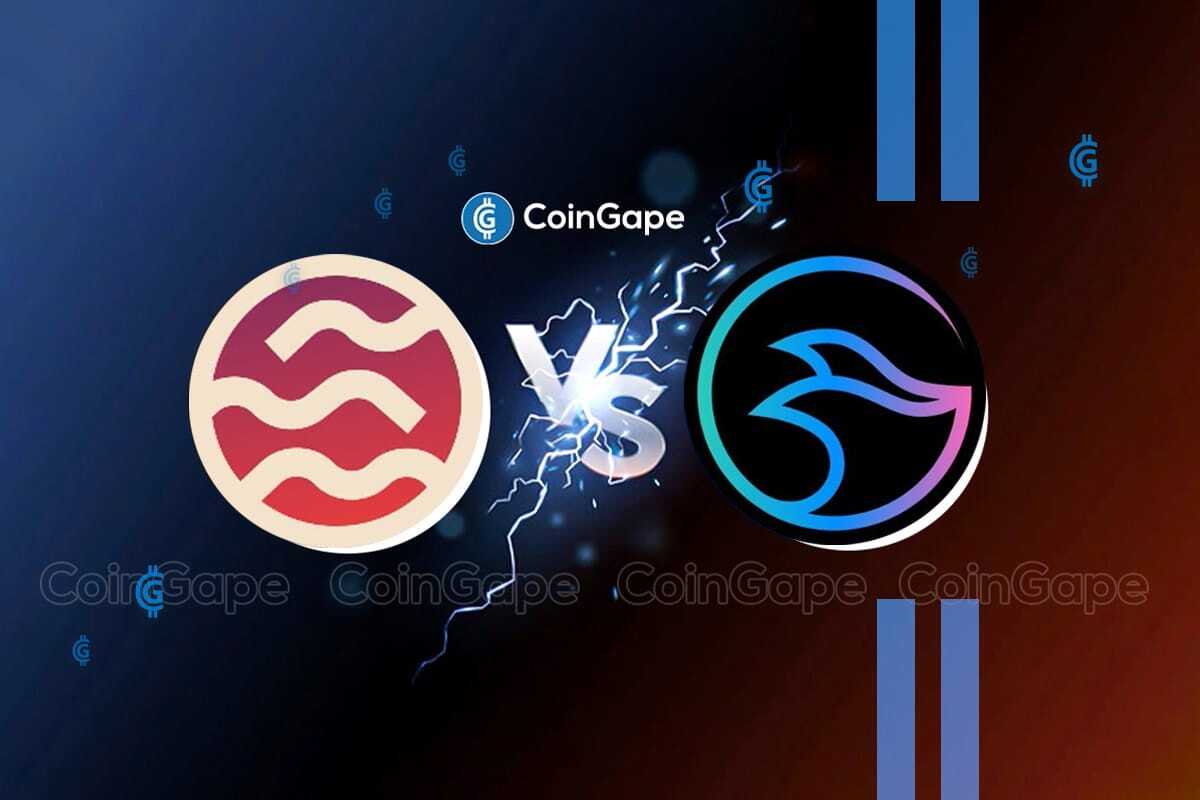
Both Sui and Manta Network are emerging blockchains that aim to address existing issues such as scalability and security. Even though the end goal they want to achieve is similar, their approaches are completely different.
One of the major differences between Sui and Manta is that while Sui prioritizes scalability and enables parallel transaction execution, Manta Network ensures the confidentiality of transactions when executing them. Also, Sui is a layer1 blockchain and Manta is built on existing blockchains like Ethereum and Polkadot.
If you would like to know more about Sui and Manta and wonder what are the other differences, this is the right article for you. Here we are going to learn 6 primary differences between Sui and Manta.
The primary difference between Sui and Manta cryptocurrencies is their consensus mechanism. While the Sui network relies on delegated Proof-of-Stake (DPoS) consensus mechanism, the Manta network employs the zk-SNARKs technology to validate transactions.
Similar to how PoS works in existing blockchains like Ethereum, validators of Sui need to stake their SUI tokens and validate transactions to ensure the security of the network. But, the Manta Network leverages the ZK-proof mechanism to verify transactions.
The Sui blockchain is the Layer1 blockchain network that focuses on scalability and security. What sets the Sui blockchain apart from other blockchains, including Manta, is its “parallel transaction execution”. With the help of this, Sui can execute multiple transactions at a time, increasing the overall efficiency of the network.
On the other hand, the Manta network is a multi-modular blockchain that is built on other existing blockchains. It has two networks – Manta Pacific and Manta Atlantic. While the Manta Pacific is a layer2 blockchain built on the Ethereum blockchain, Manta Atlantic is developed as a layer1 on the Polkadot blockchain.
Another noteworthy difference between Sui and Manta is the extent to which they are decentralized. While the Sui blockchain is more decentralized, Manta blockchain less decentralized because the ZK-SNARK technology involves centralized components.
The Sui blockchain aims to eliminate the scalability issues from blockchain, bringing ultra-high transactional throughput and finality. It was proven to execute 120,000 transactions per second (TPS) on a trial basis without compromising security, which is a game changer for the industry.
This scalable and secure nature of Sui blockchain makes it suitable for many blockchain applications such as DeFi applications, blockchain-gaming, NFTs, Web3, and more.
The Manta Network gives high priority to privacy-preserving transactions and computations. As we discussed, its ZK-proof technology verifies transactions off-chain, increasing scalability, while hiding all the transaction details and maintaining privacy. Apart from validating transactions off-chain, the Manta Network also executes smart contracts off-chain, reducing storage and computation costs.
The Sui blockchain uses the advanced “Move” programming language, which is relatively new in the industry. Developer team of Sui blockchain introduced Move when they were working on previous blockchain projects and used it as the foundation for Sui blockchain. It eliminates several issues associated with existing programming languages like Solidity and ensures high throughput and finality.
Since the Manta Pacific network was developed as a layer2 blockchain on Ethereum, it works based on Solidity language and is compatible with Ethereum Virtual Machine (EVM).
The native cryptocurrency of Sui blockchain is SUI and the MANTA is the token for Manta Network. Both of these blockchains differ vividly based on their tokenomics as well. The total supply of SUI is 10 billion whereas the total supply of MANTA is 1 billion.
The Sui coin price is $1.20 and the market capitalization is over $1.3 billion, as of January 2024. On the other hand, the MANTA token is trading at $2.95 with a market capitalization of $741 million during the same period. Even though the market price of SUI is less than that of MANTA, the market capitalization is more for SUI tokens compared to Manta.
Mysten Labs is behind the development and launch of Sui blockchain. It was formed with prominent executives and lead architects from Meta company who formerly worked on the Diem crypto project. Even though the Mysten Labs introduced Sui layer1 blockchain in 2022, its mainnet went live on May 03, 2023.
When it comes to the Manta Network, its developer team consists of seasoned founders and individuals from prestigious universities like Harvard, MIT, and Algorand Foundation. The Manta Pacific was launched in September 2023 whereas the Manta Atlantic network was launched in April 2023.
Even though both Sui and Manta focus on scalability and executing more transactions per second, they follow different approaches. While the Sui blockchain uses the DPoS consensus mechanism, Manta works based on ZK-SNARK technology. If we prioritize on-chain transaction and smart contract execution, then Sui blockchain is the right platform. However, if reducing computational costs and storage is the priority, then Manta network is the best option.
Both of these blockchains are showing considerable growth and only time will tell if they become successful in surviving in the crypto industry.











 2M+ Monthly Readers
 50k+ Articles