GTA 6 Crypto Scams Are Draining Wallets: Why Web3 Gaming Needs Clearer Boundaries



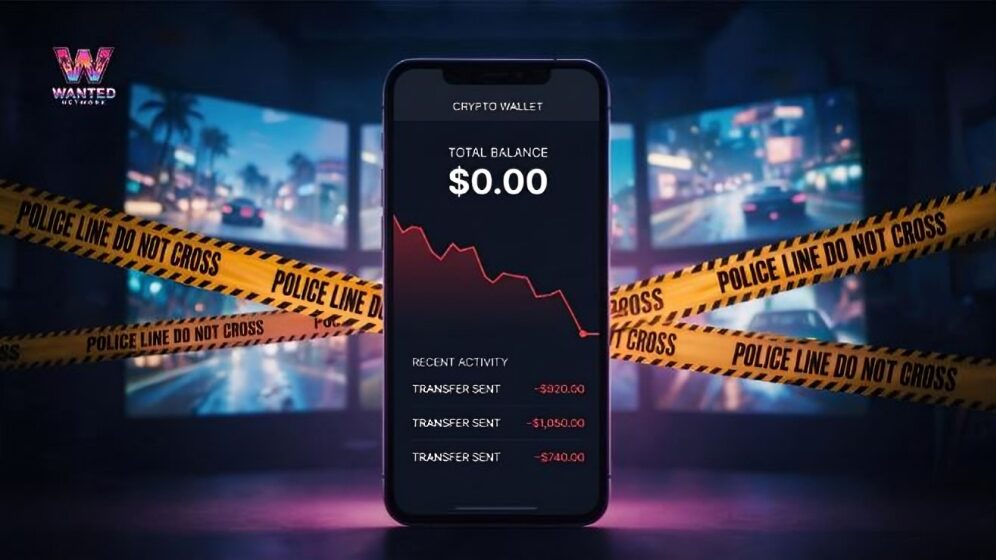
Grand Theft Auto VI hype is now colliding directly with crypto fraud. Security researchers have documented fake GTA 6 early-access offers that demand cryptocurrency payments, malicious “leaked copy” sites that attempt to drain connected wallets and token promotions that borrow Rockstar’s cultural momentum without any official connection to the game.
That makes “GTA 6 crypto” a real search category — but not for the reason legitimate Web3 builders would want.
Semrush currently estimates about 320 monthly U.S. searches for “GTA 6 crypto,” with a keyword difficulty of 20. “GTA 6 early access” is larger at roughly 1,000 searches per month. Meanwhile, broader terms such as “crypto scams” remain far larger, reflecting the size of the security problem surrounding digital assets.
The overlap creates a useful warning for the next phase of crypto gaming: when a mainstream game becomes large enough, Web3 projects have to be extremely clear about what is official, what is independent and what is simply exploiting the brand.
Fake GTA 6 Access Is Already Using Crypto as the Payment Rail
Malwarebytes reported in June that fraudulent sites were offering supposed GTA 6 early access for hundreds of dollars in Bitcoin, USDT or Ethereum. The sites copied the visual language of premium game launches, but there was no game behind the payment.
In September, the threat became more aggressive. Malwarebytes documented a fake GTA 6 “leaked copy” site that could load a crypto wallet drainer and target assets across multiple blockchain networks. The scam used the excitement around unreleased game content as the entry point, then turned a wallet connection into the attack surface.
The problem is not that GTA 6 contains crypto.
Rockstar’s official GTA VI website currently lists the game for PlayStation 5 and Xbox Series X|S and promotes pre-orders, trailers and editions. It does not announce a cryptocurrency, NFT system or blockchain reward program.That gap between official information and online speculation is exactly where scammers operate.
Crypto Tokens Can Hijack Gaming Attention Too
The scam economy is not limited to fake game downloads.During the summer, alleged GTA 6 leaks were also used to promote an unofficial Solana token. Reporting around the campaign described stolen or unverified footage being used to generate attention for a crypto asset with no official connection to Rockstar or Take-Two.The pattern matters more than the specific token.
A major game creates search demand. Unofficial operators attach a token, wallet connection or crypto payment flow to that demand. The branding looks familiar enough to create confusion, while blockchain transactions make it difficult or impossible to reverse losses once a victim sends funds.
For legitimate crypto gaming companies, this is a reputational problem. Every fake “official” token makes the next real Web3 product harder to explain.
Web3 Gaming Needs a Clearer Rule: Never Borrow Official Status
The safest boundary is simple: external crypto projects should never imply that a game publisher has integrated a token unless the publisher has actually announced it.
There is still a large legitimate opportunity around gaming culture without crossing that line.
Creators can build communities around a game. Brands can sponsor creators who cover it. External platforms can reward content, coordinate campaigns or use blockchain rails for payments and reputation. None of those activities requires claiming that the game itself runs on-chain.
That distinction is especially important for GTA 6 because the cultural audience is likely to be enormous. A crypto project can participate in the surrounding creator economy while remaining explicit that it is independent from Rockstar Games.

Where Wanted Network Fits
Wanted Network is an example of that external model.The platform is being built around creator Missions, Bounties, Heat reputation and WNTD-powered rewards. Its connection to gaming comes from the creators and campaigns operating around gaming culture — not from claiming that WNTD is an official GTA 6 currency or that Rockstar has integrated the token.
That boundary matters.
A Mission could reward creators for producing gaming content, participating in a campaign or covering a cultural moment around a major release. Advertisers could use the network to coordinate those creators. WNTD can function inside Wanted Network’s own crypto economy without being represented as an in-game GTA 6 asset.
For Web3 gaming, that may be the more sustainable path anyway.
The Opportunity Is Around the Game, Not Inside It
GTA 6 will generate enormous attention before and after launch. Crypto projects will inevitably try to capture some of it.The difference between a legitimate external creator economy and a scam will often come down to clarity.Does the project clearly identify who operates it? Does it explain what the token actually does? Does it avoid pretending to have partnerships that do not exist? Are wallet connections and payments happening for a real product rather than fake access to someone else’s game?
Those questions are becoming more important as gaming and crypto overlap.
The current GTA 6 scam wave shows what happens when that boundary disappears. Users see familiar branding, connect a wallet or send crypto, and only discover afterward that there was never an official product.
Web3 gaming does not need to stop building around mainstream game culture. It needs to become much better at distinguishing independent crypto infrastructure from fake affiliation.
Wanted Network
- Website — https://wantednetwork.io
- Discord — https://discord.gg/wantednetwork
- X — https://x.com/Wanted_Network


- BestChange Wins Best Crypto Exchange Aggregator at Global Onchain Awards Singapore 2026
- Toobit Wins Best Exchange/Platform for Trading Tokenized Equities at Global Onchain Awards Singapore 2026
- HiBT Wins Best Global Event Contracts Exchange at Global Onchain Awards Singapore 2026
- TOKEN2049 Announces US Expansion, Bringing the World’s Largest Crypto Conference to New York
- CoinGape Unveils Jury for Global Onchain Awards 2026 as Institutional Leaders Take the Judging Bench
For PR & Sponsored Content Reach us :
 @Coingapeofficials