
South Korea Media Regulator Votes to Block Polymarket Access



Highlights
- South Korea's KCSC voted on August 18 to block Polymarket, ruling it an illegal gambling operator under the Criminal Act.
- Regulators rejected Polymarket's decentralization defense, citing localized markets like "Seoul rainfall in August" as proof of domestic targeting.
- The block adds South Korea to a growing list with France, Germany, Australia, Indonesia, and India restricting Polymarket access.
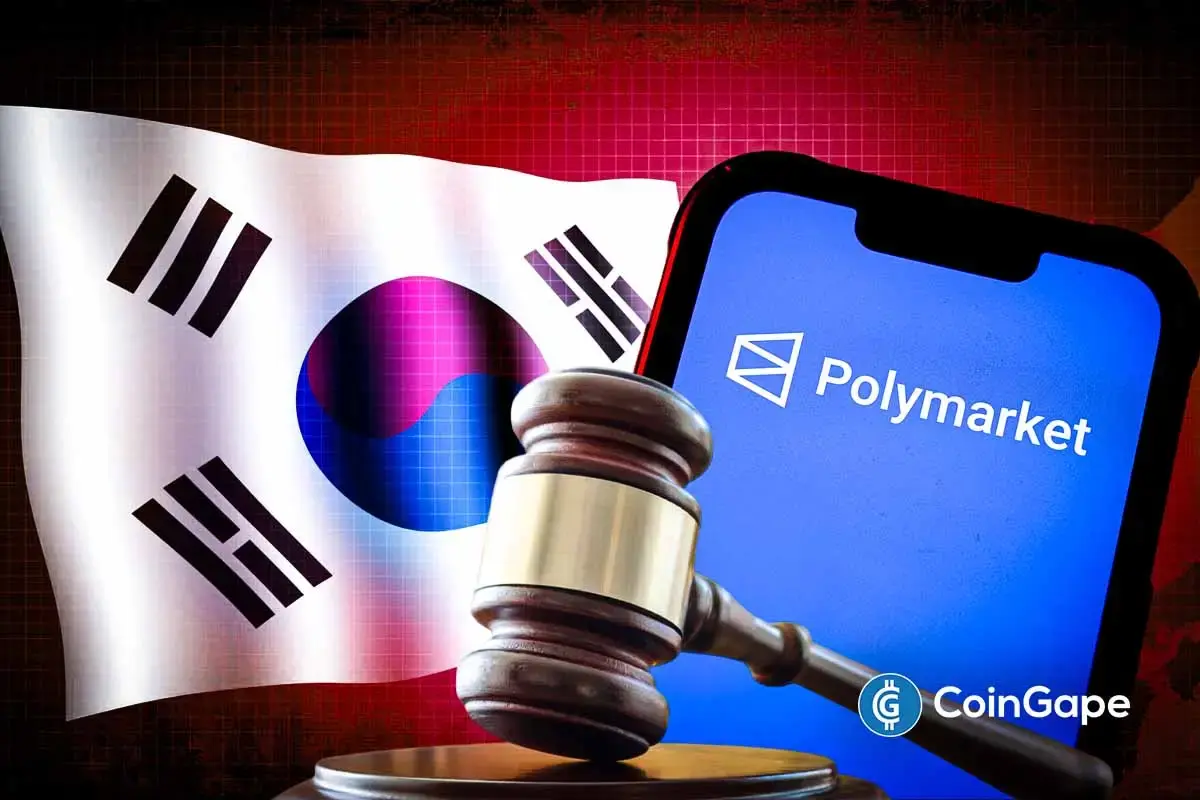
South Korea’s media regulator has voted to block domestic access to Polymarket, the world’s largest decentralized prediction market.
The Korea Communications Standards Commission made the ruling on August 18, 2026, classifying the platform as an illegal gambling operator under the country’s Criminal Act.
The decision escalates a multi-month regulatory standoff that had already drawn scrutiny from users, police, and national gambling authorities.


Regulators Reject Polymarket’s Decentralization Defense
South Korea’s Broadcasting, Media and Communications Review Committee found that Polymarket’s winner-takes-all profit structure encourages speculative behavior.
The committee said outcomes tied to events users cannot control, politics, sports, weather, and elections mirror the defining feature of illegal gambling.
Polymarket argued it operates as a non-custodial, peer-to-peer smart contract platform. It pointed to the removal of Korean-language services as evidence it no longer targets domestic users.
The regulator rejected both claims. According to the committee’s statement, technical decentralization and interface localization cannot exempt a platform from South Korean law when it effectively provides an illegal gambling environment to local users.
The platform had already removed Korean-language support and hidden Korea-specific markets in July 2026 as a preemptive step during the hearing process.
Locally tailored markets, including one titled ‘Seoul rainfall in August,’ were cited as direct evidence of targeting domestic users under a winner-takes-all structure.
The final access-block order will require South Korean telecom operators to enforce ISP-level restrictions.
Users attempting access via VPN remain exposed to individual enforcement risk under Article 246 of the Criminal Act, which carries fines of up to 10 million won (approximately $6,500).
The crackdown did not emerge overnight. In May 2026, formal review proceedings opened following user complaints.
By June, prosecutors had launched criminal probes into domestic users. The escalation follows a wider pattern of institutional pressure.
NYC regulators have also probed Polymarket over deceptive advertising, while the CFTC issued direct warnings to the platform this summer.


Polymarket Faces a Widening Wall of Global Restrictions
South Korea joins France, Germany, Australia, Indonesia, and India in restricting access to Polymarket.
Each jurisdiction has reached similar conclusions through different legal frameworks, but the underlying logic is consistent.
A platform where real-money outcomes hinge on uncontrollable events operates close enough to gambling to warrant restriction.
The timing compounds existing pressure on the platform. Just days before the Korean ruling, JPMorgan had maintained banking ties with Polymarket even after previously de-banking it.
A relationship that drew renewed scrutiny as the platform navigates IPO speculation alongside mounting regulatory friction.
On August 19, one day after the Korean block was announced, the White House was scheduled to meet with crypto and prediction market executives.
A meeting that now carries sharper urgency as another major Asian market closes its doors to decentralized event contracts.
The CFTC has also warned Polymarket and rival Kalshi against using American-style gambling odds amid growing state-level scrutiny in the United States.
Together, these developments point to a sector facing simultaneous regulatory pressure across multiple continents with no clear resolution in sight.
For investors, the Korean decision adds another layer of geo-restriction risk to Polymarket’s liquidity profile. South Korea is one of the highest-volume crypto markets in Asia.
Any reduction in the accessible user base, even if partially offset by VPN workarounds, narrows the depth of event markets and can widen spreads on active contracts.
No immediate price-impact data is available, but regulatory headlines of this type historically suppress speculative volumes in the short term.
Learn how to earn passive income with crypto through staking, lending, and more.
Instant Currency Exchange at BestChange with Ease
- Compare Rates Across 1000+ Exchanges
- Access 250+ Cryptocurrencies & Pairs
- Save Time with Real-Time Price Tracking
- Trusted & Verified Exchange Listings

Why Trust CoinGape
CoinGape has covered the cryptocurrency industry since 2017, aiming to provide informative insights Read more… to our readers. Our journal analysts bring years of experience in market analysis and blockchain technology to ensure factual accuracy and balanced reporting. By following our Editorial Policy, our writers verify every source, fact-check each story, rely on reputable sources, and attribute quotes and media correctly. We also follow a rigorous Review Methodology when evaluating exchanges and tools. From emerging blockchain projects and coin launches to industry events and technical developments, we cover all facets of the digital asset space with unwavering commitment to timely, relevant information.



Delivered every day.
- Insights that move markets
- 100,000 active subscribers

CRYPTO IMPACT AWARDS 2026