

Paybis vs MoonPay: Which Is Better for Buying Crypto?


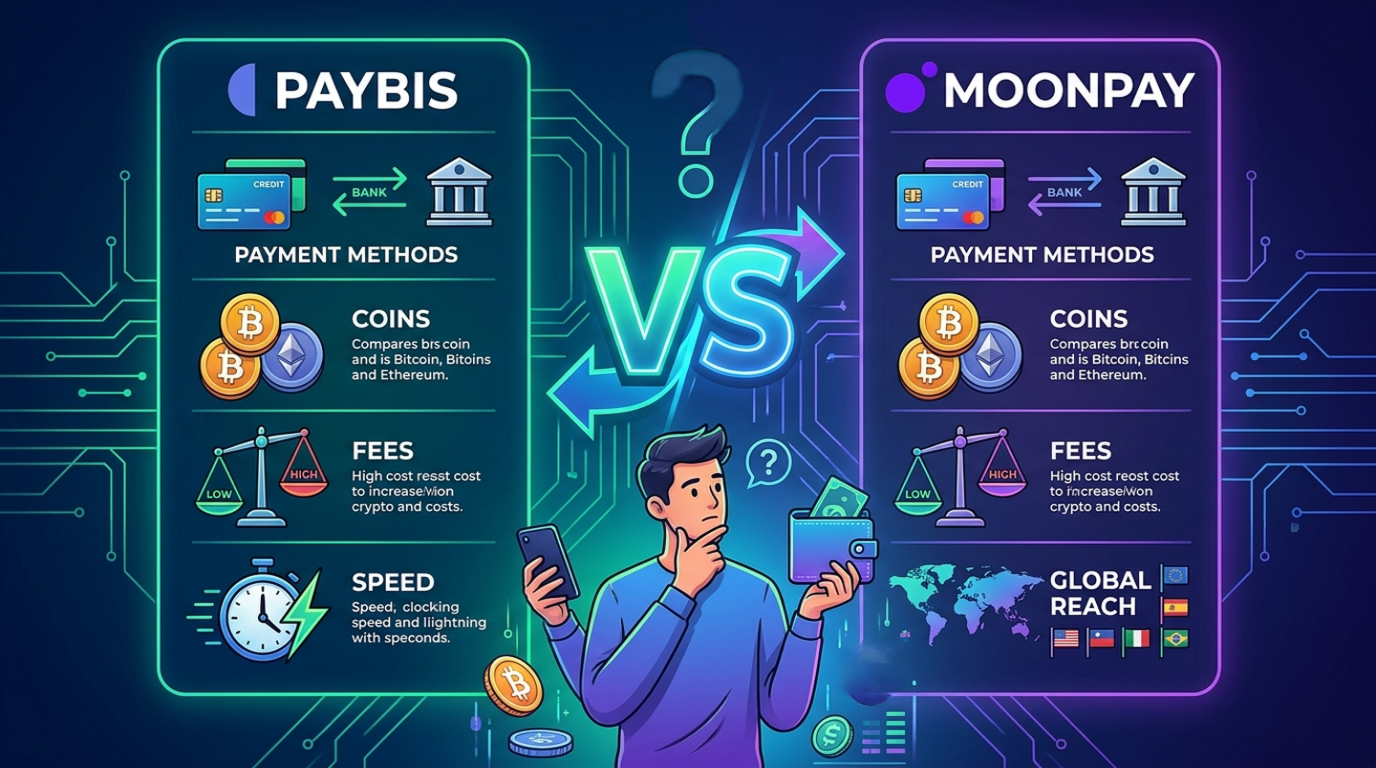
Paybis and MoonPay are two of the most prominent global fiat-to-crypto gateways, but they have very different focuses and edges. Paybis is a customer-focused payment gateway offering end users instant fiat-to-crypto conversions, early fee transparency, near-instant KYC, and various fiat and crypto payment methods.
MoonPay is an embedded B2B infrastructure partner that works closely with many major Web3 products to expand ecosystems and offer a wide range of tokens. These aspects are compared across a range of coins, fiat payment methods, KYC speed, language availability, regulatory status, fee limits, and purchase experience:
| Feature | Paybis | MoonPay |
| Supported Cryptocurrencies | 90+ cryptocurrencies, including BTC, ETH, USDT, XRP, DOGE, SOL, ADA, LTC, and more | 100+ cryptocurrencies, with availability depending on region and regulation |
| Payment Methods | Up to 22 methods: Visa/Mastercard, bank transfer, SEPA, ACH, SWIFT, PayPal, Revolut Pay, Skrill, Neteller, PaysafeCard, AstroPay, M-Pesa, PIX, SPEI, BLIK, Klarna and other local options | Cards, Apple Pay, Google Pay, PayPal, MoonPay Balance, Venmo, Revolut, SEPA/SEPA Instant, Faster Payments, PIX, Interac and other regional options |
| Verification Speed (KYC) | Under 2 minutes | Automated verification typically takes a few minutes; additional checks may take longer |
| Languages Supported | 30+ languages through customer-support translation | MoonPay’s mobile app is primarily English-language; localized web/service availability varies |
| Regulatory Authorities | Latvijas Banka — MiCA CASP + PSD2 Payment Institution; FinCEN (US); FINTRAC (Canada); Polish VASP registration; UK financial-promotion approval | AFM (EEA), FCA (UK), FinCEN (US), FINTRAC (Canada), AUSTRAC (Australia), JFSC (Jersey), plus applicable US state regulators |
Investors can buy crypto with a credit card on both platforms, but let’s explore their differences in detail.
Paybis vs MoonPay: Fees and Purchase Limits
Paybis offers a fully transparent fee pricing structure by providing customers with a detailed breakdown with each transaction, including service fees, card processing fees (4.5% for over $50 payments), and network gas fees. Paybis has a 0% service fee on your first card purchase per crypto asset, then 1.49%. Minimums and maximums vary by payment method, country, currency, verification status, and account limits.
MoonPay adds a maximum of 4.5% on credit/debit card transactions and 1% on bank transfers. A dynamic exchange rate spread can also be included. Buying and selling with MoonPay Balance has no transaction fees, although top-ups may incur fees depending on the region and payment method. Minimum and maximum purchase limits on MoonPay also depend on the country of residence, payment rail, and verified account level.
Which Is Faster for Buying Crypto: Paybis or MoonPay?
Speed covers both account onboarding and all outgoing transactions. Paybis offers a direct, highly automated KYC process (<2 mins screen time) that is complemented by a live support team on constant standby since Paybis serves both retail plus B2B. Once your identity check succeeds, the card processing takes seconds, and tokens are sent immediately to any third-party self-custody wallet. However, purchases can take up to 15 minutes for first-time users, and blockchain transfers may take longer.
On average, MoonPay’s automated verification takes a couple of minutes, but being an embedded widget within other wallets (e.g., MetaMask) can result in additional verification cycles if identity isn’t approved. Initial card payments go through fast, but multiple orders may be put on a temporary hold until extra risk assessments, 3D Secure protocols, or local banking regulations require additional manual reviews.
Paybis vs MoonPay: Regulation, Availability and User Experience
Both services have strict regulatory compliance with many jurisdictions worldwide: Paybis is authorised as a crypto-asset service provider under MiCA by the Bank of Latvia and holds the PSD2 Payment Institution license, which ensures strict fund segregation and fiat safeguards based on European law. Paybis is registered with FinCEN in the US, FINTRAC in Canada, and the Polish VASP register. MoonPay is registered with FinCEN and with FINTRAC, with AUSTRAC in Australia, and with the US money transmitters license in many US states.
Paybis delivers its service to 180+ countries and 30+ languages; the simple-to-use Web and app accessible portal is available for immediate operations. It supports 90+ cryptocurrencies with instant transfer providers. MoonPay delivers one dedicated mobile application on top of its huge system of embedded Web3 checkout widgets to over 150 countries, but in the US and some states like NY and Hawaii, its functionality is limited by state regulations.


- Standard, Expert or Raw Spread? How to Compare Forex Account Types Beyond the Headline Spread
- Bitget Launches Open Custody Network, Giving Institutions Choice in Custody and Access to Markets
- ETHSpain 2026 Puts Infrastructure at the Center of Ethereum’s Next Chapter
- Compounding vs Drawdown: The Math Active Traders Often Underestimate
- A 1960s-Style Evening Is Coming to TOKEN2049 Singapore, Courtesy of ChangeNOW