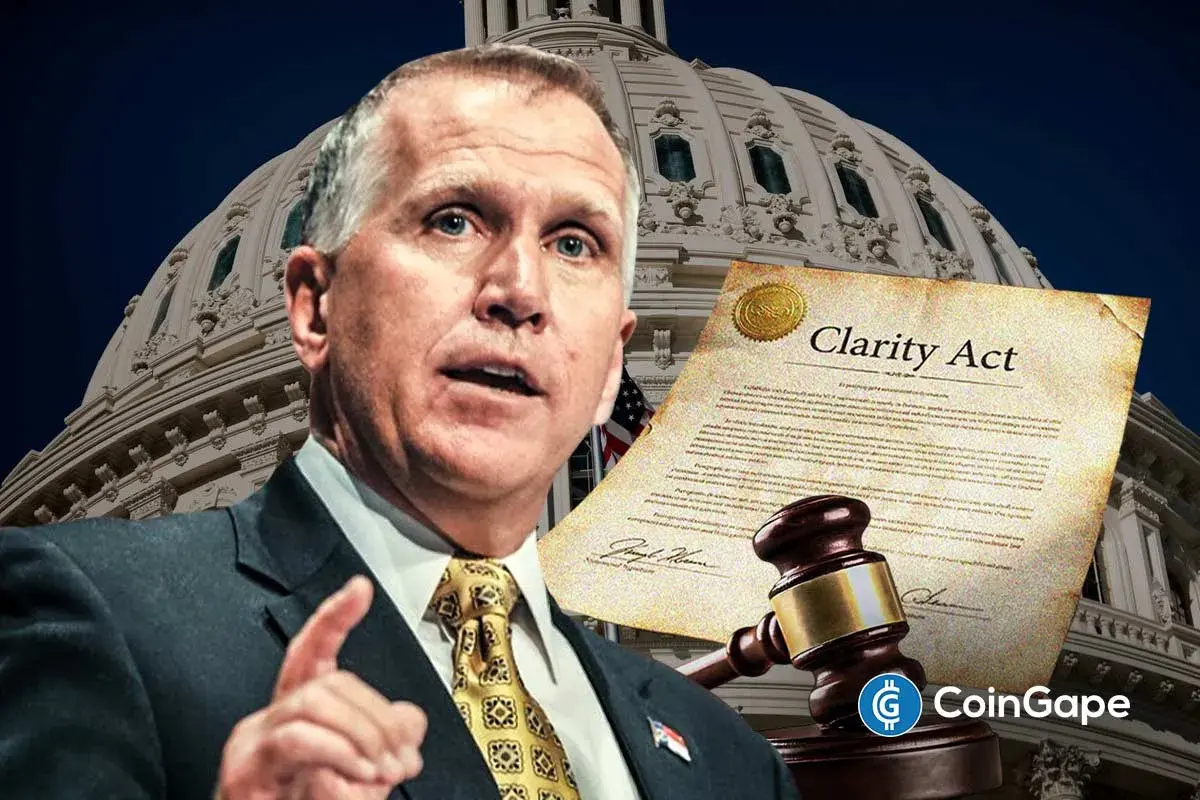



Breaking: India Orders GitHub Takedown of Jack Dorsey’s Bitchat Repos Amid Student Protests


Highlights
- India's I4C gave GitHub a three-hour deadline to pull three Bitchat repositories under Section 79(3)(b) of the IT Act.
- Jack Dorsey posted the notice on X, saying India wants his Bluetooth mesh messaging app taken down.
- The Internet Freedom Foundation called the order unconstitutional, noting deleted repos cannot disable already-installed apps.
India’s cybercrime authority has ordered GitHub to remove three repositories of Bitchat, Jack Dorsey’s open-source Bluetooth mesh messaging app, as NEET 2026 student protesters used it to stay connected during internet blackouts in New Delhi. Dorsey publicly disclosed the government notice on July 24, 2026, calling out the move directly on X.


Dorsey Fires Back; Internet Freedom Foundation Calls Move Unconstitutional
The Indian Cyber Crime Coordination Centre (I4C), operating under the Ministry of Home Affairs, issued Notice No. 11072601011432 on July 23, 2026.
It invoked Section 79(3)(b) of the IT Act 2000, read with Rule 3(1)(d) of the IT Rules 2021. GitHub received a three-hour deadline to take down the repositories.
Mobile internet had been suspended in a 1.5 km radius around Jantar Mantar and parts of Connaught Place in Central Delhi.
Protesters, camping since June over examination irregularities, turned to Bitchat precisely when those networks went dark.
The app’s Bluetooth Low Energy mesh architecture lets phones relay messages hop-by-hop with no internet, no mobile network, no phone numbers, and no central servers. I4C argued this setup “significantly impedes lawful interception, attribution, and investigation.”
Dorsey posted screenshots of the official notice on X the morning of July 24, stating that “the government of India does not like technologies like Bitchat and wants it taken down.”
the government of india does not like technologies like bitchat and wants it taken down pic.twitter.com/gjzMg1NGCi
— jack (@jack) July 24, 2026
The statement is consistent with Dorsey’s core rationale for Block’s Bitcoin focus, his long-held conviction that censorship-resistant, permissionless infrastructure must sit outside any government’s reach.
The Internet Freedom Foundation (IFF) responded immediately, condemning the order as unconstitutional.
The IFF argued the notice misuses Section 79 of the IT Act, which is not a blocking power under the Supreme Court’s Shreya Singhal precedent.
It also said the order fails to identify any specific unlawful content and is circular in its reasoning.
Statement : The blocking of BitChat's code on GitHub is unconstitutional and authoritarian.
New Delhi, 24 July 2026
The Internet Freedom Foundation (IFF) condemns the order issued by the Indian Cyber Crime Coordination Centre (I4C), Ministry of Home Affairs, directing GitHub… pic.twitter.com/s3wdJEOPK7
— Internet Freedom Foundation (IFF) (@internetfreedom) July 24, 2026
The IFF also pointed out a practical reality: deleting GitHub repositories does not remove already-downloaded apps. Bluetooth mesh networks continue to function offline, beyond any government’s ability to flip a single switch.


A Pattern Governments Cannot Ignore, and Investors Are Watching
This is not the first government to take aim at Bitchat. China’s Cyberspace Administration of China (CAC) ordered Apple to pull the app from its China App Store in April 2026, citing regulations governing services with “public opinion or social mobilization capabilities.”
The app had already proven its value in real protest situations: it was used during disruptions in Madagascar, Uganda, Nepal, Indonesia, and Iran when authorities cut internet access.
The pattern is consistent with India’s aggressive crypto and digital enforcement posture, with regulators viewing decentralized tools as threats to state control over communication channels.
India’s regulatory posture toward decentralized technology has hardened over time.
The RBI has consistently leaned toward crypto restriction despite India’s 39 million traders, and the Bitchat crackdown fits the same governance philosophy: control over infrastructure that enables autonomous, unmonitored coordination.
Track active ICOs and upcoming token sales in one place.
Instant Currency Exchange at BestChange with Ease
- Compare Rates Across 1000+ Exchanges
- Access 250+ Cryptocurrencies & Pairs
- Save Time with Real-Time Price Tracking
- Trusted & Verified Exchange Listings
Why Trust CoinGape
CoinGape has covered the cryptocurrency industry since 2017, aiming to provide informative insights Read more… to our readers. Our journal analysts bring years of experience in market analysis and blockchain technology to ensure factual accuracy and balanced reporting. By following our Editorial Policy, our writers verify every source, fact-check each story, rely on reputable sources, and attribute quotes and media correctly. We also follow a rigorous Review Methodology when evaluating exchanges and tools. From emerging blockchain projects and coin launches to industry events and technical developments, we cover all facets of the digital asset space with unwavering commitment to timely, relevant information.


Delivered every day.
- Insights that move markets
- 100,000 active subscribers

Global Onchain Awards 2026