


GOP Senator Josh Hawley Opposes Clarity Act Vote Over Community Bank Fears


Highlights
- Senator Josh Hawley plans to vote ‘No’ on Clarity Act over the banks’ concerns.
- Coinbase CEO Brian Armstrong fires back as banks continues to object crypto bill citing stablecoin yield programs.
- Senate Majority Leader John Thune yet to file cloture on Clarity Act despite progress.


Why Senator Josh Hawley to Vote ‘No’ on Clarity Act?
Josh Hawley, a Republican Senator from Missouri, announced he plans to vote against the Clarity Act. He cited concerns from community banks and agricultural groups in his state.
“They are very, very worried about the effect on community banks. They are blowing me up over it,” Hawley stated. “I’m going to vote with my state on this,” he told Politico.
The objection centers on stablecoin yield programs offered by crypto exchanges and platforms. Senator Hawley and community banking advocates argue that any yield or incentives on stablecoin holdings could pull deposits away from banks and credit unions.
The move adds challenges for the Republican Party as they push for a vote on the landmark crypto market structure bill before the Senate’s August recess.
Notably, Hawley has previously opposed related stablecoin legislation, including the GENIUS Act. However, Senator Cynthia Lummis earlier confirmed discussions with his office are ongoing to resolve concerns.


Coinbase CEO Brian Armstrong and Crypto Community Fire Back
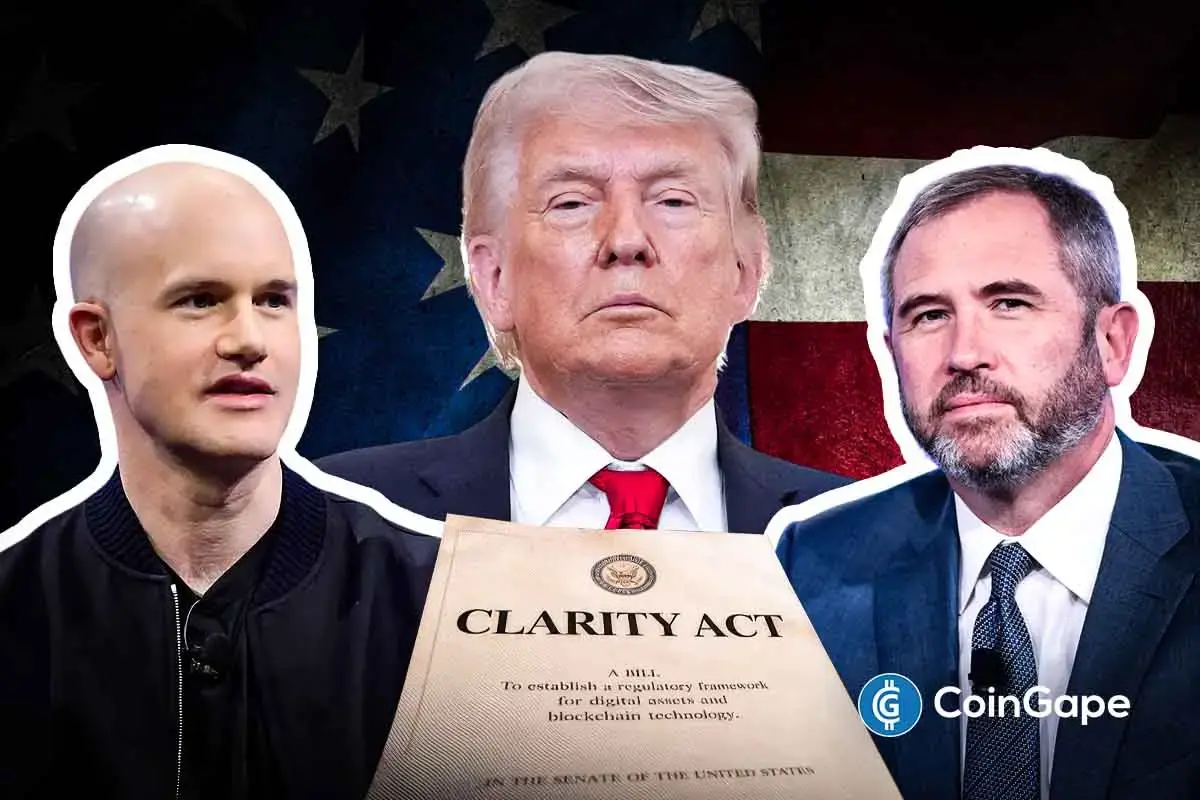
Coinbase CEO Brian Armstrong pushed back and said, “You have to evaluate the proposal on the merits, and see if there is any evidence for such a claim.”
He also questioned if there might be “other incentives the bank lobby has to falsely make this statement.” This involves the profits of big banks and has nothing to do with community banks.
Brian Armstrong also asked Senator Josh Hawley to look at data rather than unsupported claims. Coinbase CEO is among the prominent supporters of the current version of the Clarity Act, having opposed prior drafts over stablecoin yield restrictions.
John Deaton, a Senate candidate and XRP advocate, said “The banking industry has many of these clowns in their pockets.” Meanwhile, the crypto community called the stance outrageous and sparked calls to contact his office.
The banking industry has many of these clowns in their pockets. Hey @HawleyMO, since when is capitalism about protecting incumbents from disruption? Here’s an idea: either an industry adapts with the innovation or it dies. I didn’t realize it was your job, as a U.S. Senator, to… https://t.co/SDCBBQIsAN
— John E Deaton (@JohnEDeaton1) August 5, 2026
Senate Majority Leader Didn’t File Cloture Motion on Clarity Act
The U.S. Senate continues to deliberate on the next steps for the Clarity Act, with no cloture motion on crypto bill filed on Wednesday. The crypto community now awaits a cloture motion by Senate Majority Leader John Thune by Thursday.
The cloture filing will begin the process for a procedural vote before Senate members depart for the August recess. The bill requires 60 votes to overcome a filibuster, with 53 Republicans in the Senate. Opposition by Josh Hawley and potentially Rand Paul increases challenges for the crypto bill.
Meanwhile, the White House started negotiating ethics provisions of the Clarity Act with both parties. It hints at a key breakthrough before a Senate vote, pushing the final Senate floor vote to mid-September.
For investors navigating the shifting policy environment, choosing from a list of highly secure, regulated crypto exchanges can help reduce counterparty risks.
Instant Currency Exchange at BestChange with Ease
- Compare Rates Across 1000+ Exchanges
- Access 250+ Cryptocurrencies & Pairs
- Save Time with Real-Time Price Tracking
- Trusted & Verified Exchange Listings

Why Trust CoinGape
CoinGape has covered the cryptocurrency industry since 2017, aiming to provide informative insights Read more… to our readers. Our journal analysts bring years of experience in market analysis and blockchain technology to ensure factual accuracy and balanced reporting. By following our Editorial Policy, our writers verify every source, fact-check each story, rely on reputable sources, and attribute quotes and media correctly. We also follow a rigorous Review Methodology when evaluating exchanges and tools. From emerging blockchain projects and coin launches to industry events and technical developments, we cover all facets of the digital asset space with unwavering commitment to timely, relevant information.



Delivered every day.
- Insights that move markets
- 100,000 active subscribers

Global ONCHAIN AWARDS 2026