


CLARITY Act Faces 2030 Risk as Lummis Warns Senate Clock Is Running Out


Highlights
- Lummis warns that failure to pass the CLARITY Act could delay U.S. crypto market-structure rules until 2030.
- The Sept. 15 Senate cloture vote faces a tight timeline and requires 60 votes to advance debate.
- Disputes over stablecoins and DeFi remain, despite growing support from lawmakers and industry leaders.
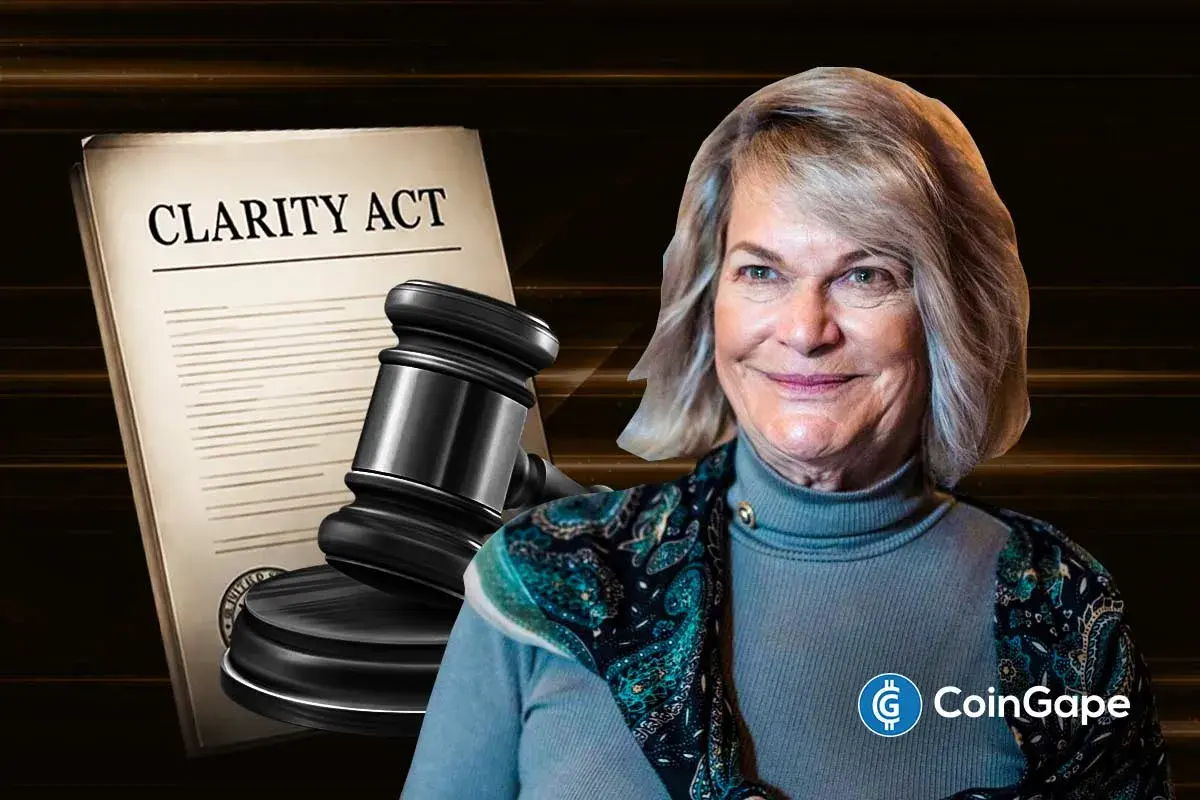
Sen. Cynthia Lummis has warned that the CLARITY Act may be running out of road. Speaking days before a critical Senate vote, she cautioned that Congress fails to pass U.S. market-structure legislation in this session.
The next realistic window may not open until 2030, a delay she says would cost the country jobs, investment, and tax revenue.


Lummis Puts 2030 Risk on the Senate Clock
Lummis’s latest warning came Sept. 6, just days before the Senate’s scheduled cloture vote. The Sept. 15 cloture vote needs 60 votes to advance debate.
Republicans hold 53 seats, making Democratic and independent support critical. Cloture would not pass the bill. It would only open the next stage.
The House calendar creates another problem. Recent reporting on the late-September House cancellations shows how little floor time may remain if the Senate changes the bill.
That makes the path from Senate approval to final enactment increasingly compressed.
The legislation has already cleared major hurdles. The House passed its version 294–134 in July 2025, while the Senate Banking Committee advanced its text 15–9 in May 2026.
Lummis has also promoted a Wyoming-style digital asset framework as a model for federal rules.


Why 2030 Could Matter for U.S. Crypto Markets
The CLARITY Act would clarify SEC-CFTC jurisdiction and establish rules for digital-asset intermediaries, custody and customer protection.
However, lawmakers still face disputes over ethics, stablecoin yield and DeFi. CoinGape recently outlined the three Senate fights before Sept. 15 that could determine whether 60 votes are achievable.
One political obstacle has already weakened. The National Sheriffs’ Association recently moved from opposition to neutral.
That removes a major law-enforcement objection, although it does not amount to an endorsement.
The Sheriffs’ shift to neutrality therefore improves the backdrop without resolving the vote.
Other lawmakers and industry figures are still pushing for passage. Rep. French Hill has argued for approval before the midterms, while Ripple CEO Brad Garlinghouse has urged Congress to finish the job on crypto legislation.
Coinbase CEO Brian Armstrong has likewise backed clearer rules while warning against government overreach, as outlined in Armstrong’s CLARITY Act comments.
For investors, the distinction between a Senate vote and actual enactment is crucial. Prediction markets are already separating those outcomes, with the 2026 enactment odds offering a live gauge of legislative expectations.
A Sept. 15 cloture win would reduce uncertainty, but it would not make the framework law.
If Congress misses the window, the CLARITY Act could remain stalled while firms navigate fragmented federal and state rules.
Lummis’s 2030 warning is therefore less about a single failed vote and more about the cost of another multi-year delay.
Compare the top cloud mining platforms by contract terms and payout reliability.
Instant Currency Exchange at BestChange with Ease
- Compare Rates Across 1000+ Exchanges
- Access 250+ Cryptocurrencies & Pairs
- Save Time with Real-Time Price Tracking
- Trusted & Verified Exchange Listings

Why Trust CoinGape
CoinGape has covered the cryptocurrency industry since 2017, aiming to provide informative insights Read more… to our readers. Our journal analysts bring years of experience in market analysis and blockchain technology to ensure factual accuracy and balanced reporting. By following our Editorial Policy, our writers verify every source, fact-check each story, rely on reputable sources, and attribute quotes and media correctly. We also follow a rigorous Review Methodology when evaluating exchanges and tools. From emerging blockchain projects and coin launches to industry events and technical developments, we cover all facets of the digital asset space with unwavering commitment to timely, relevant information.



Delivered every day.
- Insights that move markets
- 100,000 active subscribers

Global Onchain Awards 2026