


Philippines Bans Privacy Coins, Tightens Crypto Listing Rules


Highlights
- The Philippines' central bank banned VASPs from listing privacy coins.
- VASPs must vet tokens against six pillars covering issuers, reserves, and risks.
- Stablecoins face added checks on their full lifecycle and reserve backing.
The Bangko Sentral ng Pilipinas (BSP), the Philippines’ central bank, has banned virtual asset service providers from listing privacy coins and ordered them to tighten how they screen, monitor, and remove the tokens offered to customers.


No More Privacy Coins on Philippine Platforms
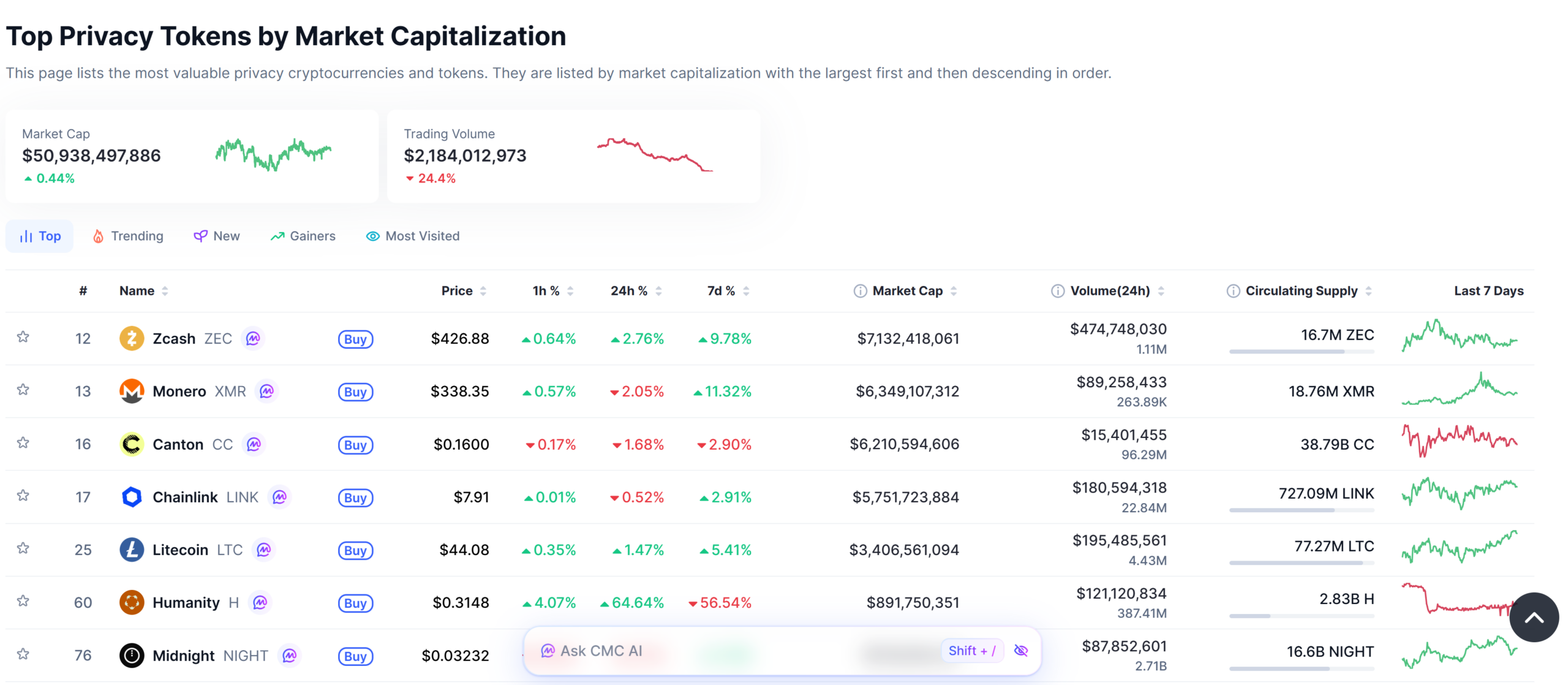
In a memorandum, the central bank said anonymity-enhancing virtual assets, tokens designed to obscure transaction details, are prohibited from being listed or supported by VASPs operating in the country, according to a recent report from The Philippine Star.
The ban comes as part of a broader overhaul of listing standards. BSP Deputy Governor Lyn Javier said providers must build a “robust due diligence and accreditation process” before adding any coin or token to their platforms.
Under the guidelines, VASPs must assess each asset against six pillars, including the issuer’s background, market maturity, use cases, transparency and security, redemption and reserves, and legal and compliance risks, per the report.
For issuer checks, firms may review incorporation papers, audited financials, ownership structure, ultimate beneficial owners, and fitness assessments of the people behind a project, along with any conflicts of interest.
On market maturity, the regulator said providers may weigh a token’s market capitalization, 30-day trading volume, number of on-chain holders, years in the market and the exchanges that support it. Whitepapers must be readily available to customers, including tokenomics, supported blockchains and disclosed risks spanning money laundering, terrorist financing, cybersecurity and governance.


Stablecoins Face Extra Reserve Checks Under BSP Rules
The BSP also mentioned asset-backed and fiat-backed tokens, which includes stablecoins. The central bank said VASPs must examine the full lifecycle of such coins, from minting and issuance to burning, and verify the composition of their reserves.
“The BSP said these factors are important in determining a virtual asset’s ability to meet redemption demand, support market stability and maintain public trust in its valuation,” the report claimed.
The memorandum also requires continuous monitoring after listing. VASPs must set thresholds for deviations from their standards that act as triggers for delisting. The regulator said tokens should be suspended or immediately removed in cases of legal non-compliance, cybersecurity concerns, consumer protection risks, misleading disclosures, market abuse or abnormal price movements.
Last year, the Philippine SEC warned against ten unlicensed crypto exchanges, including OKX, Bybit, Kraken, MEXC, Bitget, Phemex, CoinEx, BitMart, and Poloniex, for operating without authorization under the country’s new crypto rules. The regulator said the platforms have no license or registration to operate or solicit investments locally, exposing Filipino investors to significant risk.
The SEC said the list is not exhaustive and that other unregistered platforms also risk violating securities laws.
Instant Currency Exchange at BestChange with Ease
- Compare Rates Across 1000+ Exchanges
- Access 250+ Cryptocurrencies & Pairs
- Save Time with Real-Time Price Tracking
- Trusted & Verified Exchange Listings

Why Trust CoinGape
CoinGape has covered the cryptocurrency industry since 2017, aiming to provide informative insights Read more… to our readers. Our journal analysts bring years of experience in market analysis and blockchain technology to ensure factual accuracy and balanced reporting. By following our Editorial Policy, our writers verify every source, fact-check each story, rely on reputable sources, and attribute quotes and media correctly. We also follow a rigorous Review Methodology when evaluating exchanges and tools. From emerging blockchain projects and coin launches to industry events and technical developments, we cover all facets of the digital asset space with unwavering commitment to timely, relevant information.



Delivered every day.
- Insights that move markets
- 100,000 active subscribers