
US Senators Give Apple Aug 21 Deadline to Dump Blacklisted Chinese Chipmakers CXMT & YMTC

Highlights
- A bipartisan Senate group gave Apple until August 21, 2026, to abandon plans to source memory chips from Pentagon-blacklisted firms CXMT and YMTC.
- The pressure lands as an AI-driven memory shortage forces Apple price hikes, with Samsung, SK Hynix, and Micron set to benefit from the diversification block.
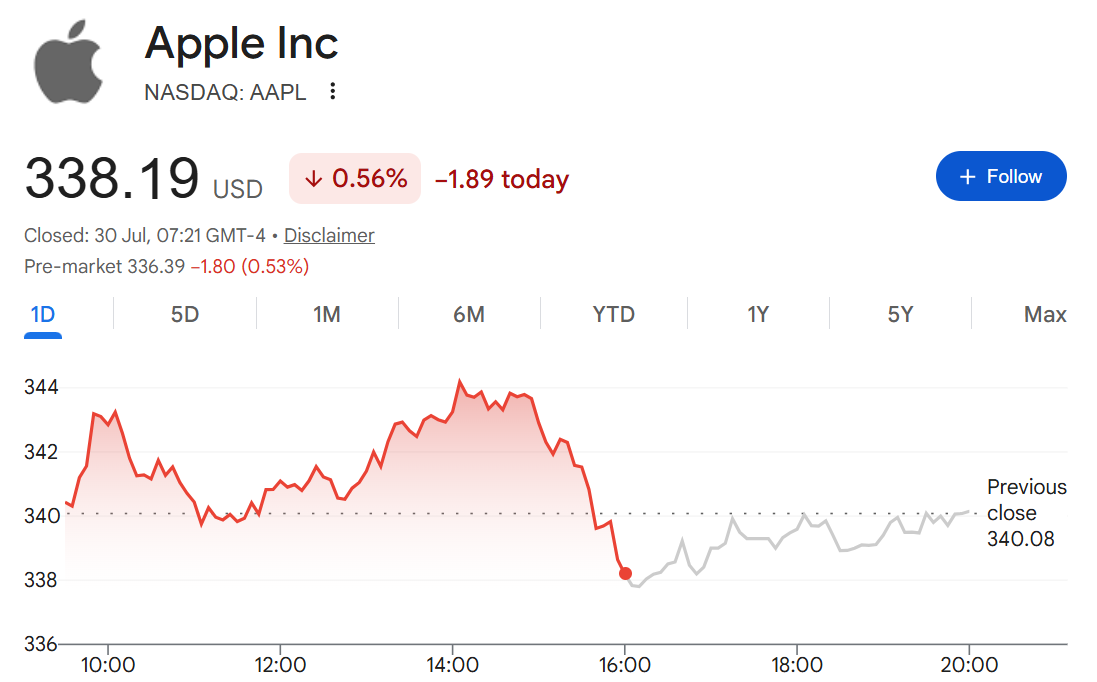
- AAPL closed at $338.19 on July 30 and slipped further pre-market, as investors price in margin and supply chain risk.
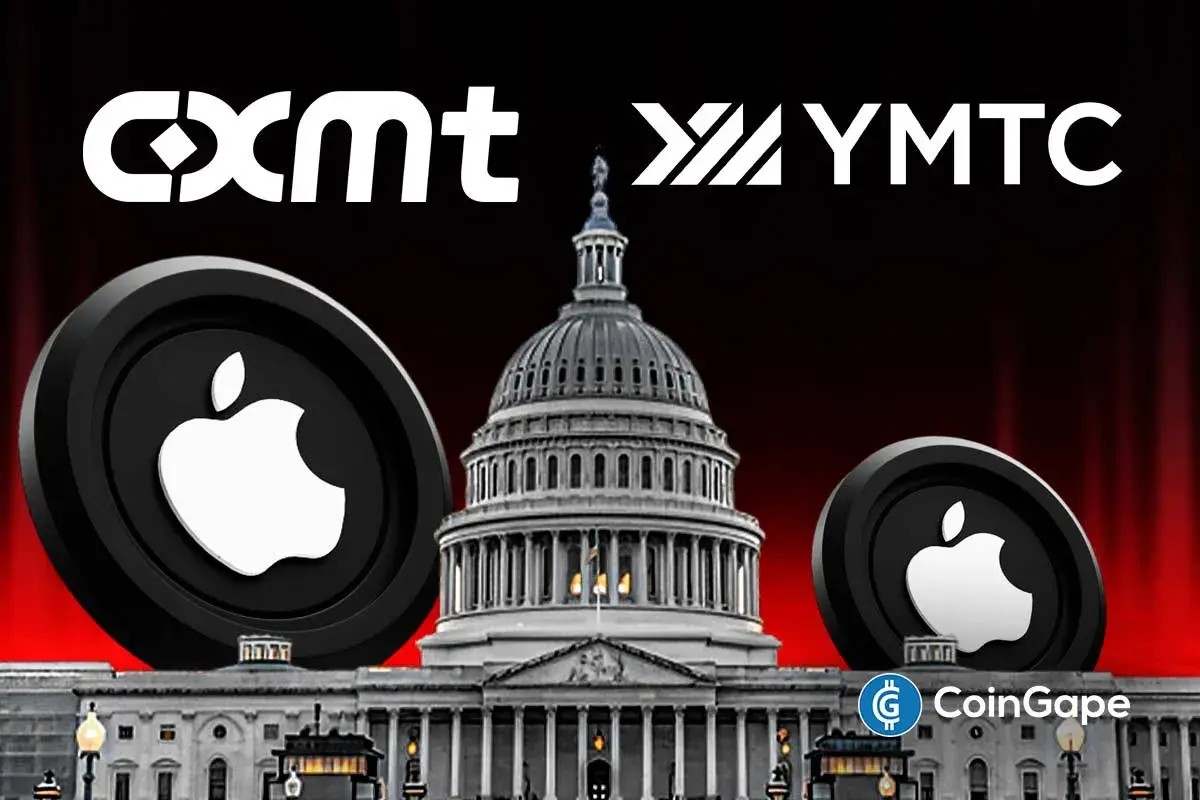
A bipartisan group of US senators has warned Apple CEO Tim Cook to abandon any plans to source memory chips from Chinese suppliers ChangXin Memory Technologies (CXMT) and Yangtze Memory Technologies Co. (YMTC), giving the tech giant a hard deadline of August 21, 2026, to formally commit.


Pentagon-Blacklisted Firms at the Center of the Senate Demand
The demand, first reported by Bloomberg, comes as Apple fights a brutal AI-driven memory chip shortage that has already forced major price hikes across its product lines.
The letter, led by Indiana Republican Jim Banks and New York Democrat Chuck Schumer, also includes Democrats Andy Kim and Jeanne Shaheen and Republicans Mike Crapo and Pete Ricketts.
Both CXMT and YMTC appear on the Pentagon’s updated 1260H list, a designation for Chinese companies believed to support Beijing’s military.
YMTC sits on a separate Commerce Department blacklist that restricts controlled technology transfers.
CXMT, notably, completed a blockbuster IPO in Shanghai earlier this week, yet lawmakers argue that even a China-only supply arrangement poses risks.
“Once a part clears qualification for Apple production, extending it worldwide is a single procurement decision away,” the senators wrote.
They also pressed Apple on whether it has shared intellectual property with either firm during component qualification, a move that may require a Commerce Department license.
This is not Apple’s first brush with YMTC. In 2022, Apple explored sourcing NAND flash memory from YMTC for iPhones, an effort that collapsed under bipartisan opposition in Washington.
The current situation mirrors that episode, but the stakes are higher. Global DRAM and NAND prices have surged as AI data centers absorb the bulk of output from the ‘Big Three’, Samsung, SK Hynix, and Micron.
That supply squeeze is exactly what pushed Apple to raise prices across Macs, iPads, home devices, and Vision Pro in June 2026, with Tim Cook stating publicly that “everything needs to be on the table” regarding supply.
Crypto-native infrastructure operators face a related version of the same crunch, with companies like Core Scientific pivoting to AI data center deals amid fierce competition for chips and power capacity.


Investor Implications: Margin Risk, Geopolitical Premium, and the AI Memory Crunch
For investors, this confrontation highlights structural fault lines in the AI semiconductor supercycle. South Korean chipmakers and Micron stand to benefit from Apple’s inability to diversify.
Samsung and SK Hynix recently cemented a $950B AI chip deal with Nvidia, Broadcom, and others, locking in HBM capacity and further squeezing consumer-grade supply.
Markets are already reacting. AAPL stock closed at $338.19 on July 30, down 0.56% (-$1.89) on the day.
The intraday chart tells a sharper story: the stock traded as high as $344 before noon, then fell off a cliff near the market close, shedding roughly $6 in under two hours as the Senate letter made headlines.
Pre-market activity on July 31 extended the slide, with AAPL quoted at $336.39 (-0.53%), suggesting investors are pricing in the risk of margin compression, a supply chain rethink, or both.
The previous close stood at $340.08, now a level that looks increasingly like resistance.
The broader market is already pricing in AI-bubble risk. Bitcoin price action after the FSB chief flagged AI bubble fears following a $650B tech selloff showed how tightly crypto and tech valuations are now linked.
If Apple’s margin pressure deepens or escalates into a trade dispute, the ripple effects across tech and digital asset markets could be significant.
Apple has not publicly responded to the senators’ letter as of press time.
Lawmakers have also asked whether Apple sought priority allocation from US or South Korean memory suppliers, a question that will likely shape Apple’s next supply chain move and its memory chip strategy heading into the 2027 iPhone cycle.
Compare the best crypto platforms for staking rewards to grow your holdings passively.
Instant Currency Exchange at BestChange with Ease
- Compare Rates Across 1000+ Exchanges
- Access 250+ Cryptocurrencies & Pairs
- Save Time with Real-Time Price Tracking
- Trusted & Verified Exchange Listings

Why Trust CoinGape
CoinGape has covered the cryptocurrency industry since 2017, aiming to provide informative insights Read more… to our readers. Our journal analysts bring years of experience in market analysis and blockchain technology to ensure factual accuracy and balanced reporting. By following our Editorial Policy, our writers verify every source, fact-check each story, rely on reputable sources, and attribute quotes and media correctly. We also follow a rigorous Review Methodology when evaluating exchanges and tools. From emerging blockchain projects and coin launches to industry events and technical developments, we cover all facets of the digital asset space with unwavering commitment to timely, relevant information.



Delivered every day.
- Insights that move markets
- 100,000 active subscribers

CRYPTO IMPACT AWARDS 2026