Vitalik Buterin Calls for EIP-8288 Maximalism to End Ethereum Precompile Wars



Highlights
- Vitalik Buterin is calling for EIP-8288 maximalism, arguing heavy cryptography should be STARKed client-side and never pushed onto Ethereum’s main chain.
- The proposal aggregates signatures and proofs in-mempool, so L1 only verifies a single compact STARK instead of adding a new precompile per scheme.
- The upside is sharp cost cuts, with multi-million-gas private transactions potentially falling to the low tens of thousands and quantum-safe signatures becoming wallet-viable.
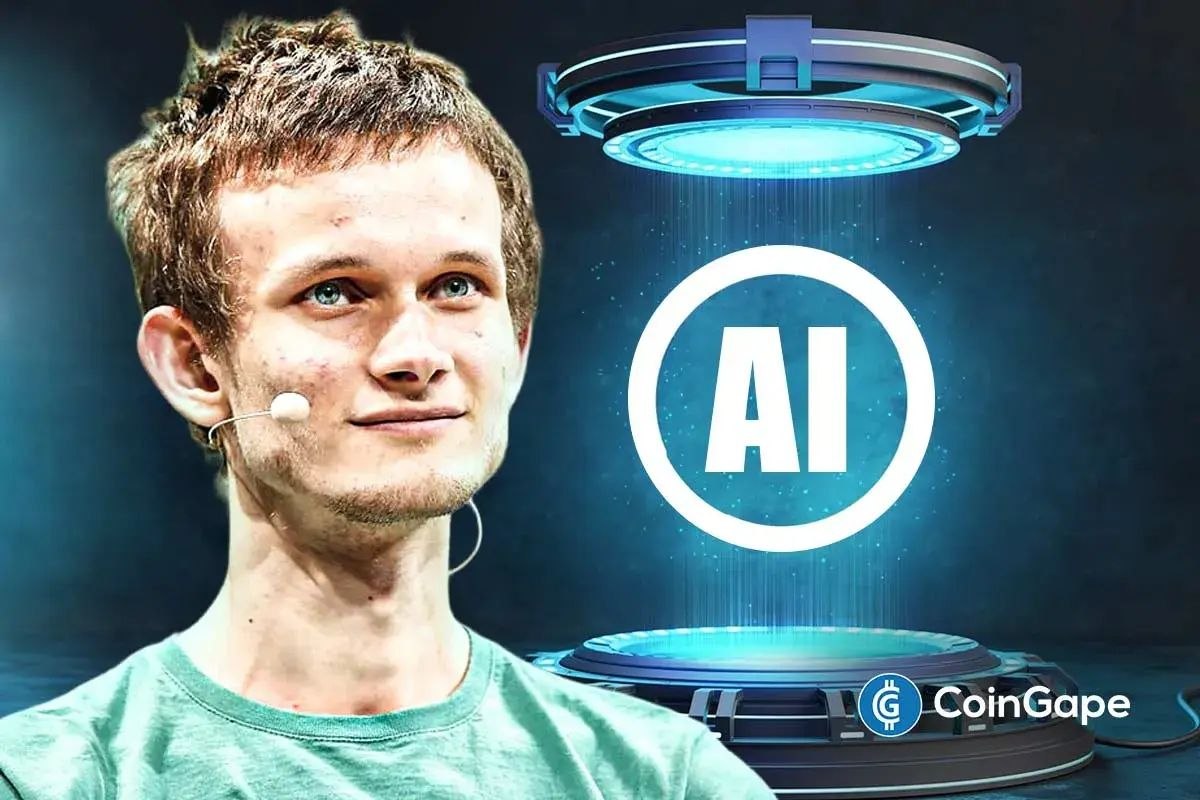
Ethereum co-founder Vitalik Buterin is calling for EIP-8288 maximalism. In a post on X on October 19, 2026, he argued that heavy cryptography should be STARKed client-side, and never pushed onto Ethereum’s main chain.
His argument is simple: the network should not keep adding new precompiles every time a new cryptographic scheme emerges.
Instead, any signature or proof system can be wrapped in a STARK, verified off-chain, and settled on L1 as a compact aggregate proof.


Heavy Cryptography Must Live Client-Side, Not on Ethereum L1
EIP-8288, co-authored by Buterin and Thomas Coratger, introduces a frame mode for in-mempool signature and proof aggregation.
Transactions carry lightweight dependency frames instead of bulky signature or STARK data. Mempool nodes then recursively aggregate those dependencies into a single compact STARK.
On-chain, Ethereum only verifies the aggregate proof, roughly 100–300 kB plus 96 bytes per statement.
Buterin stated it plainly: “It’s not a blockchain. It’s a cryptographic world computer. Any data or computation that does not need to be in the main thread should not be put into the main thread.”
This framing extends the broader Lean Ethereum roadmap he has been advancing, which makes privacy and quantum resistance first-class protocol goals.
The proposal sits downstream of earlier Frames work. Notably, Ethereum and Base recently split on EIP-8130 and EIP-8141 standards after their Frames collaboration broke down, a rift that makes a clean EIP-8288 path on Ethereum’s own terms more pressing.

A Lean L1 Could Unlock Cheaper Private and Quantum-Safe Transactions
The practical upside of EIP-8288 is dramatic cost reduction. Multi-million-gas private transactions could fall into the low tens of thousands.
Quantum-safe signature schemes, SPHINCS-style and similar, become viable on everyday wallets without bloating the base layer.
That matters given Ethereum’s own roadmap. The Ethereum Foundation has targeted full quantum-resistant Layer 1 by end-2029, with the Hegota upgrade serving as a groundwork step.
EIP-8288 is described as a logical next step after Frames, hoped for inclusion in the subsequent “I-star” fork.
The comments align with Buterin’s recent activity off the protocol itself. Just days ago, he published details of a privacy-focused AI agent that routes through Tor and uses zkAPI payments to limit identity leaks, a design philosophy that mirrors his push to shift sensitive computation off the critical path of the chain.
For investors, a leaner base layer with cheaper advanced cryptography supports higher long-term adoption of privacy tools and complex applications. Institutional interest remains firm.
Bitmine recently added 12,532 ETH as Tom Lee forecast outperformance for crypto-adjacent equities. Meanwhile, Citi raised its 12-month Ethereum target to $3,028, citing protocol-level improvements as a structural long-term driver.
Instant Currency Exchange at BestChange with Ease
- Compare Rates Across 1000+ Exchanges
- Access 250+ Cryptocurrencies & Pairs
- Save Time with Real-Time Price Tracking
- Trusted & Verified Exchange Listings

Why Trust CoinGape
CoinGape has covered the cryptocurrency industry since 2017, aiming to provide informative insights Read more… to our readers. Our journal analysts bring years of experience in market analysis and blockchain technology to ensure factual accuracy and balanced reporting. By following our Editorial Policy, our writers verify every source, fact-check each story, rely on reputable sources, and attribute quotes and media correctly. We also follow a rigorous Review Methodology when evaluating exchanges and tools. From emerging blockchain projects and coin launches to industry events and technical developments, we cover all facets of the digital asset space with unwavering commitment to timely, relevant information.



Delivered every day.
- Insights that move markets
- 100,000 active subscribers

Global ONCHAIN AWARDS 2026