


U.S.-Iran War: Iran Claims Tanker Attacks as War Pushes Brent Crude Past $90, Bitcoin Falling

Highlights
- Iran's IRGC claimed two oil tankers exploded in the Strait of Hormuz, pushing Brent crude to $91.40, its highest since June 11.
- Bitcoin trades at $64,051, down 0.87% in 24 hours, as higher oil stokes inflation fears and pressures risk assets.
- Brent above $92–$95 is the key trigger to watch, while a denial or de-escalation could quickly reverse the oil premium.
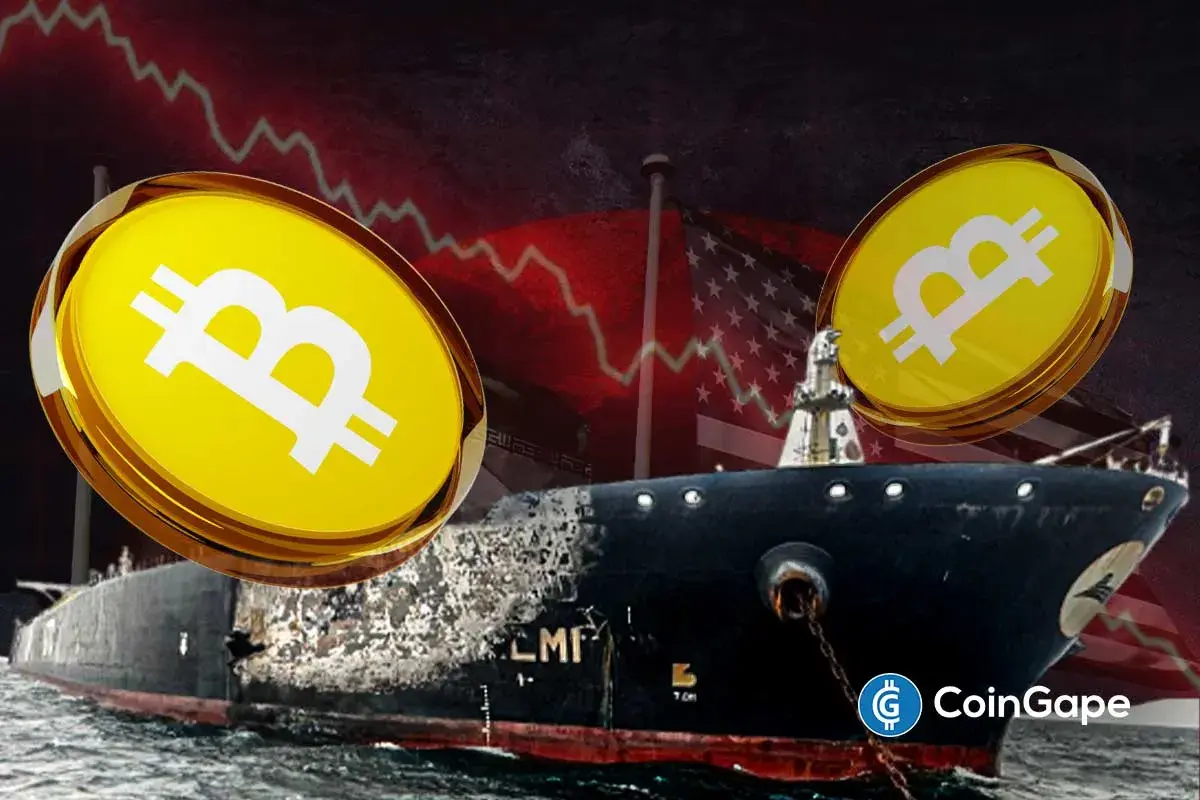
Iran’s Islamic Revolutionary Guard Corps (IRGC) claimed on July 20, 2026, that two oil tankers had exploded and been immobilized in the southern Strait of Hormuz. The claim sent oil prices surging in Strait of Hormuz headlines across global markets, pushing Brent crude to $91.40 per barrel, its highest reading since June 11.


What Rising Oil Prices Mean for Bitcoin and Crypto Markets Amid U.S Iran War
The immediate crypto market concern is straightforward: higher oil feeds inflation, and inflation signals can shift Federal Reserve expectations, dampening risk-asset appetite.
Notably, Bitcoin’s price outlook amid surging oil prices from US-Iran tensions has previously shown Bitcoin can sell off sharply when energy-driven macro stress hits markets hard.
The IRGC warned the Hormuz waterway “will not be safe” for oil and petrochemical transit as long as U.S. military activity in the region continues.
The Guards told U.S. forces to prepare for a “punitive operation.” U.S. Central Command (CENTCOM) had recently confirmed new strikes aimed at degrading Iran’s ability to target commercial shipping.
According to CENTCOM’s official statement on X, operations have been ongoing to protect civilian mariners transiting this critical waterway.
CENTCOM began conducting a new wave of strikes against Iran at 7 p.m. ET today for the ninth consecutive night. The strikes will continue degrading Iranian military capabilities used to attack commercial vessels and civilian mariners transiting the Strait of Hormuz.
— U.S. Central Command (@CENTCOM) July 19, 2026
The Strait of Hormuz is the world’s most critical oil chokepoint. Roughly one-fifth of global oil supply passes through it daily. Any disruption, real or perceived, triggers immediate energy market reactions.
This is not the first time Iran has used the strait as leverage. Oil prices have surged as Iran escalated fresh attacks on Gulf allies, energy markets have consistently shown how sensitive Brent crude is to any Hormuz-linked threat narrative.
Similar past patterns where Iran-related oil surges pressured Bitcoin prices lower are well-documented, BTC dipped below $70K as traditional risk assets sold off on inflation and volatility fears during prior U.S.-Iran escalations.
Bitcoin price prediction amid climbing oil prices tied to US-Iran developments suggests traders should track whether BTC decouples from the macro risk-off move or confirms correlation.
There is, however, a counter-narrative worth watching. Prolonged geopolitical disruption has sometimes strengthened Bitcoin’s “digital gold” thesis among institutional investors seeking alternatives to energy-exposed traditional assets.
Iran’s previous moves linking Bitcoin directly to oil transit and Hormuz-related fees add an unusual layer of context, one nation under sanctions has already explored BTC as an energy payment rail, a signal that carries long-term implications for crypto adoption in conflict economies.


Key Levels and Triggers Investors Must Watch This Week
Brent crude at $91.40 is the immediate marker. A sustained move above $92–$95 would intensify inflation concerns and put additional pressure on risk assets, including crypto.
Conversely, official denial of the tanker incident, or a de-escalation statement from either CENTCOM or Iranian officials, could quickly reverse the oil premium.
Historical Bitcoin performance during sudden oil price jumps ahead of major economic decisions shows mixed but often volatile reactions, underlining the need for disciplined position sizing.
Bitcoin (BTC) is trading at $64,051.61 at the time of writing, down 0.87% in the last 24 hours, with a 24-hour trading volume of $19.77 billion.
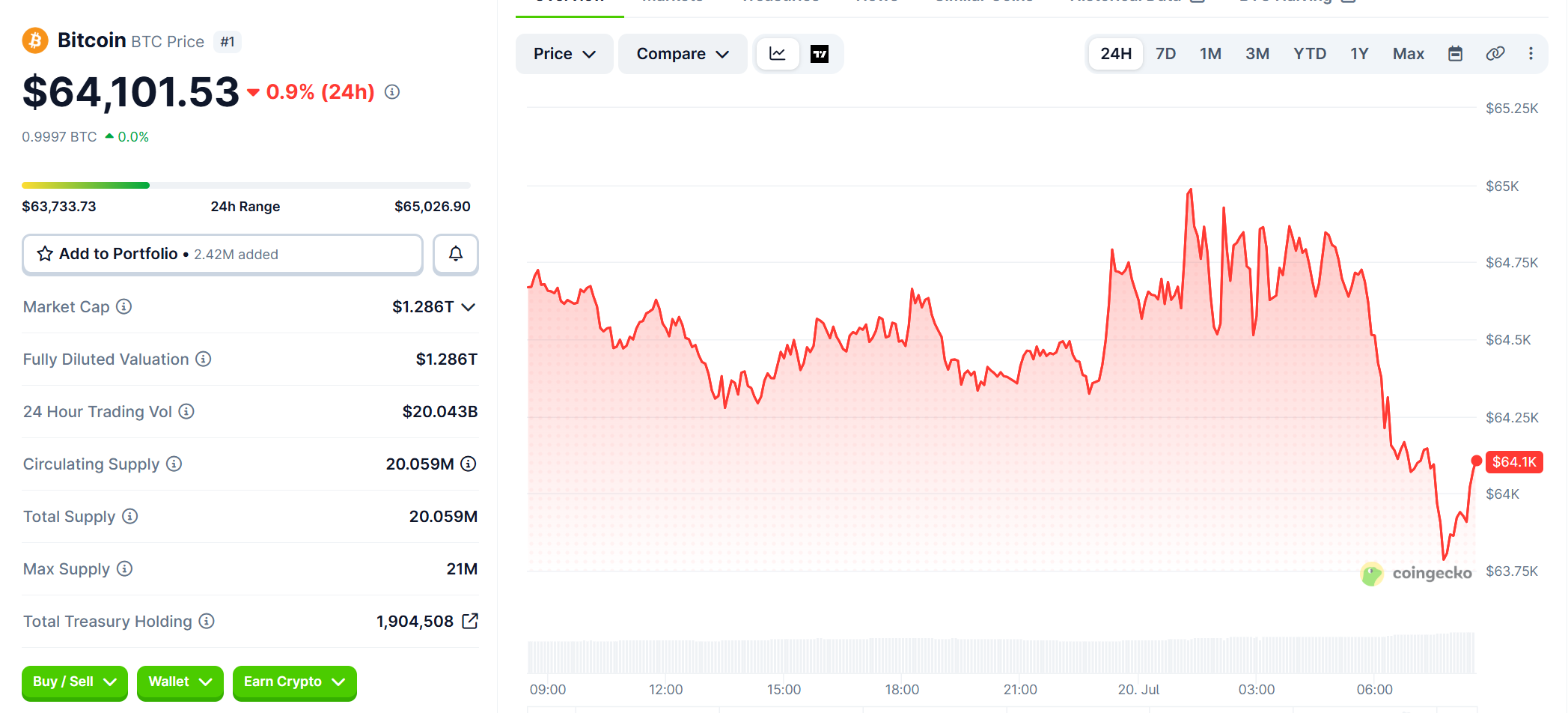
Despite the daily dip, BTC is still up 2.16% on the week, supported by a market cap of approximately $1.28 trillion and a circulating supply of 20 million BTC.
Crypto Bureau flagged the oil price spike on X, noting the speed and scale of the Brent move as unusual. The original tanker claim was first reported by Brecorder.
🚨JUST IN: OIL HITS $90 FOR THE FIRST TIME SINCE JUNE AMID IRAN TANKER CLAIMS
Brent reached its HIGHEST level since June 11, climbing to around to $91.4 per barrel, after Iran claimed it attacked two tankers in the Strait of Hormuz. pic.twitter.com/82rR04dDup
— Coin Bureau (@coinbureau) July 20, 2026
CENTCOM’s naval blockade operations update also signals that U.S. military engagement in the Hormuz corridor remains active and escalatory.
U.S. Navy Sailors remain focused and vigilant aboard guided-missile destroyer USS John Finn (DDG 113), as American forces continue implementing the naval blockade against Iran. As of July 19, CENTCOM has redirected 6 commercial vessels and disabled 1 to ensure full compliance. pic.twitter.com/SyutavMv6s
— U.S. Central Command (@CENTCOM) July 19, 2026
For crypto investors, the geopolitical risk premium in oil prices surges. Strait of Hormuz coverage is now a live macro variable and one that warrants close monitoring alongside BTC’s correlation to gold and equities this week.
Compare every major liquid staking protocol in our detailed guide.
Instant Currency Exchange at BestChange with Ease
- Compare Rates Across 1000+ Exchanges
- Access 250+ Cryptocurrencies & Pairs
- Save Time with Real-Time Price Tracking
- Trusted & Verified Exchange Listings

Why Trust CoinGape
CoinGape has covered the cryptocurrency industry since 2017, aiming to provide informative insights Read more… to our readers. Our journal analysts bring years of experience in market analysis and blockchain technology to ensure factual accuracy and balanced reporting. By following our Editorial Policy, our writers verify every source, fact-check each story, rely on reputable sources, and attribute quotes and media correctly. We also follow a rigorous Review Methodology when evaluating exchanges and tools. From emerging blockchain projects and coin launches to industry events and technical developments, we cover all facets of the digital asset space with unwavering commitment to timely, relevant information.



Delivered every day.
- Insights that move markets
- 100,000 active subscribers

Global ONCHAIN AWARDS 2026