Binance Website Now Fully Accessible Across PLDT and Globe Networks in the Philippines

Highlights
- PLDT has unblocked the Binance Philippines site, joining Globe to complete coverage across the country's two largest ISPs.
- The return runs through local partner BlockShoals under the SEC's StratBox sandbox, following Binance's 2024 ban.
- CZ confirmed the "very special" sandbox license on X, adding that Filipino peso fiat channels are "coming soon."
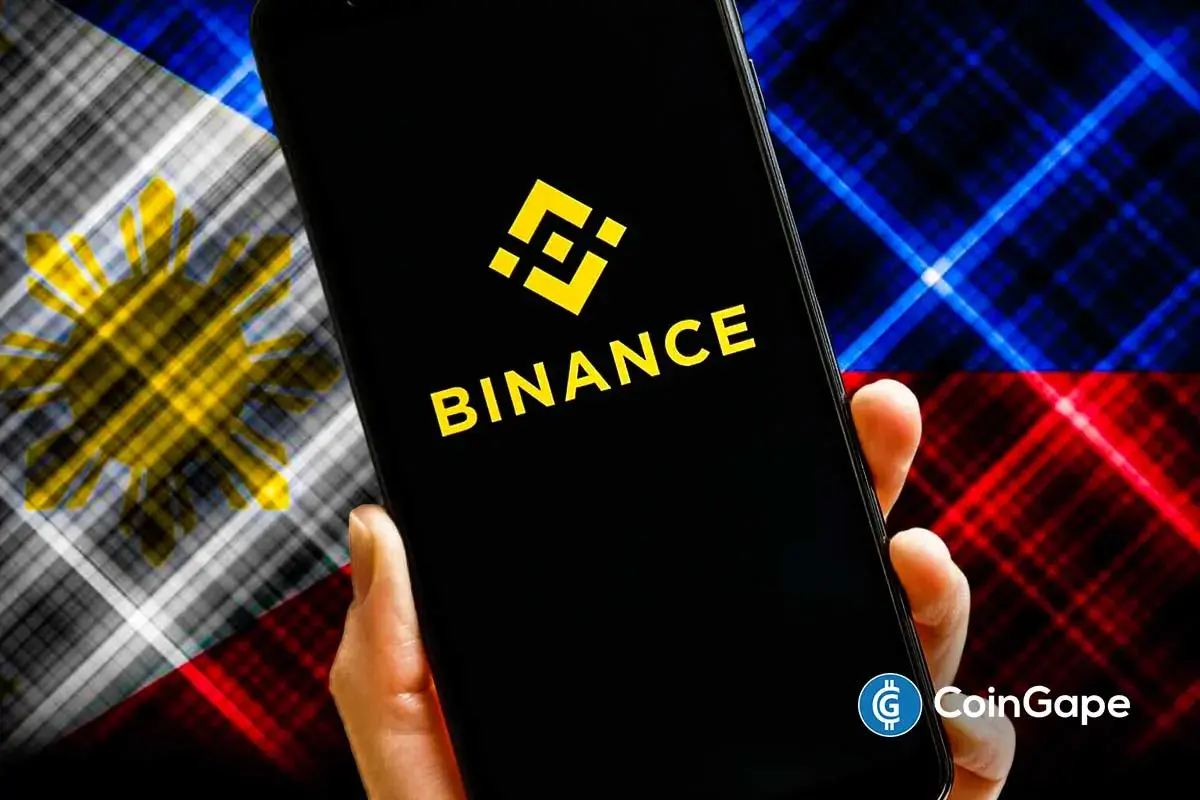
Philippine telecom giant PLDT has restored access to the Binance Philippines website (binance.com/en-PH) across its network, completing coverage across the country’s two dominant internet providers.
The move follows Globe Telecom’s earlier access restoration in May and marks a visible milestone in Binance Philippines’s structured return to one of Southeast Asia’s most active crypto markets, this time under a regulatory sandbox framework that Binance co-founder Changpeng “CZ” Zhao described as “very special.”


From Ban to Dual-Telco Unblock: How Binance Rebuilt Its Philippine Footprint
The road back was not straightforward. In March 2024, the National Telecommunications Commission (NTC) and the Philippine Securities and Exchange Commission (SEC) directed internet service providers to block Binance for offering unregistered securities without a local license.
The exchange went dark across all major Philippine networks.
The comeback followed a different model. Rather than operating directly, Binance Philippines re-entered through a local partner, BlockShoals Technologies Inc., a firm that secured in-principle approval from the SEC in November 2025 and received a Notice to Proceed with Testing on April 14, 2026.
BlockShoals operates under the SEC’s Strategic Regulatory Sandbox (StratBox) framework, defined by SEC Memorandum Circular No. 9, 2024, as a Crypto Asset Intermediary.
That structured re-entry, from ban to partnership to sandbox to progressive unblocks, is precisely what Binance’s Philippine Market Re-Entry via Sandbox Approval covered when it was first announced in July 2026. The PLDT restoration now brings that process one step closer to full visibility for Filipino retail users.
PLDT serves approximately 59 million mobile subscribers and over 3.5 million broadband users, making its network inclusion a meaningful operational signal.
The Binance website now displays localized content for Philippine users, with clear disclosure of BlockShoals’ role as the local operating entity.
CZ confirmed the development on X on July 29, 2026: “Binance has a very special sandbox license in the Philippines.
Website is unblocked in the country. Fiat channel coming soon, I hear.” His remarks followed an appearance at the ASEAN Tech Summit in Manila, where he joined FinTech Alliance Philippines Founding Chairman Lito Villanueva on stage.
The Philippines has also been tightening its broader digital asset framework.
Philippine Crypto Regulation Tightens as Privacy Coins Face Ban, a move that underscores the regulatory discipline Binance is working within, not around, as part of its sandbox playbook.

What Comes Next: Fiat Rails, App Stores, and the Investor Angle
ISP access is restored, but Binance Philippines has not yet opened full public onboarding.
BlockShoals is still executing a systems integration phase to connect local fiat payment rails and satisfy Anti-Money Laundering Act requirements.
Until that integration is complete, users cannot trade or deposit in Philippine pesos through the official channel.
On the app front, BlockShoals has indicated the Binance app may return to local app stores once the SEC notifies them of Binance’s updated regulatory status.
For investors watching exchange momentum, the dual-telco unblock lowers the VPN dependency that had been funneling Filipino users to offshore access points.
Once fiat rails go live, retail flows could accelerate quickly. The Philippines consistently ranks among the top global crypto-adoption markets by volume relative to GDP, a fact CZ explicitly cited in his post-Summit commentary on the country’s potential.
That product expansion ambition goes beyond spot trading. Binance’s broader strategic direction, including its TradFi and Tokenized Asset Stack, signals that a compliant Philippine operation could eventually carry a broader product suite than the exchange’s earlier unlicensed presence ever did.
The Philippine government has also shown a parallel appetite for digital asset infrastructure. In 2024, the country initiated a ₱10 billion tokenized treasury bond program, a move that positions the market for deeper crypto-financial integration beyond pure retail trading.
Meanwhile, CZ’s recent position on exchange strategy adds context. His July 27, 2026, note about the risks of crypto exchange acquisitions reinforces why the BlockShoals partnership model, organic, compliance-first, and non-acquisition, aligns with the approach he is publicly advocating for market re-entries.
Compare the top cloud mining platforms by contract terms and payout reliability.
Instant Currency Exchange at BestChange with Ease
- Compare Rates Across 1000+ Exchanges
- Access 250+ Cryptocurrencies & Pairs
- Save Time with Real-Time Price Tracking
- Trusted & Verified Exchange Listings
Why Trust CoinGape
CoinGape has covered the cryptocurrency industry since 2017, aiming to provide informative insights Read more… to our readers. Our journal analysts bring years of experience in market analysis and blockchain technology to ensure factual accuracy and balanced reporting. By following our Editorial Policy, our writers verify every source, fact-check each story, rely on reputable sources, and attribute quotes and media correctly. We also follow a rigorous Review Methodology when evaluating exchanges and tools. From emerging blockchain projects and coin launches to industry events and technical developments, we cover all facets of the digital asset space with unwavering commitment to timely, relevant information.


Delivered every day.
- Insights that move markets
- 100,000 active subscribers