
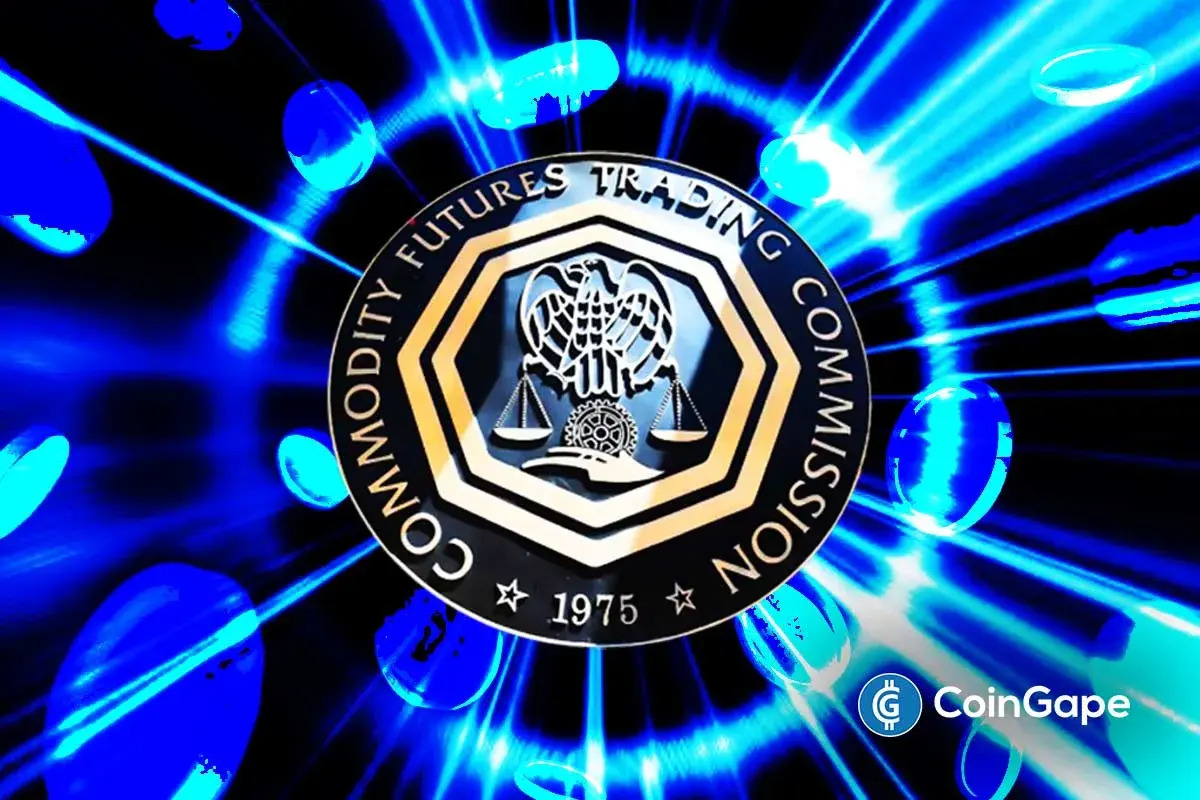
CFTC Files Lawsuit Against Utah to Defend Federal Control of Prediction Markets



Highlights
- CFTC files lawsuit against Utah to block state enforcement actions targeting federally regulated prediction markets.
- The regulator expands its legal challenges to 10 states, defending federal authority over event contracts.
- CFTC investigates whether Polymarket violated its 2022 settlement by allowing U.S. users to access offshore markets.
The Commodity Futures Trading Commission (CFTC) has sued Utah to prevent the state from enforcing gambling laws against federally regulated prediction markets. The lawsuit follows Utah’s civil enforcement actions against CFTC-registered exchanges, escalating a broader dispute over federal and state regulatory authority.
CFTC Challenges Utah’s Enforcement Against Prediction Markets
The CFTC announced the lawsuit on Tuesday, arguing that Utah’s enforcement actions conflict with federal derivatives laws. The agency says Congress gave it exclusive control over registered exchanges for event contracts.
CFTC Chairman Michael S. Selig said Utah was attempting to shut down prediction markets across several categories. He said that event contracts are hedging and can be used to gather information about the future results.
The dispute comes months after Kalshi lost its case in Utah and was now open to enforcement under Utah state gambling statutes. Kalshi has said that federally regulated event contracts should be subject to the jurisdiction of CFTC rather than state laws governing gambling.
CFTC Expands Legal Action Against State Prediction Market Restrictions
The Utah lawsuit follows the Commission’s action against state limitations on federally registered prediction markets. The agency has also filed legal action against nine other states in similar jurisdictional disputes, it said.
The regulator has also filed legal briefs in four federal appeals courts and one state supreme court. The filings are designed to establish whether federal derivatives laws bar states from regulating some event contracts.
The conflict also comes after the CFTC issued a letter to Polymarket and Kalshi regarding compliance with derivatives regulations. The warning was issued as states filed lawsuits against prediction markets with sports-related contracts.
Selig insisted the agency would stand up for its authority to regulate when states argued against federally registered exchanges. The courts have not, however, reached a final decision on the jurisdictional issue nationwide.
Polymarket Investigated Over Previous Regulatory Settlement
The CFTC is also looking into whether Polymarket breached its 2022 settlement, which mandated certain limitations on U.S. access to its offshore platform. Reuters reports that the probe is into the company’s geographic controls and advertising to American customers.
The regulator is also investigating the process for customer onboarding and protection on Polymarket’s U.S. platform. The investigation follows other probes by the CFTC and Justice Department that were similarly concluded in 2025 without charges.
Previously, Polymarket had agreed to pay a $1.4 million penalty in 2022 for unregistered event-contract trading. The company has consistently stated it has controls in place to block out restricted users on its offshore markets.
Instant Currency Exchange at BestChange with Ease
- Compare Rates Across 1000+ Exchanges
- Access 250+ Cryptocurrencies & Pairs
- Save Time with Real-Time Price Tracking
- Trusted & Verified Exchange Listings

Why Trust CoinGape
CoinGape has covered the cryptocurrency industry since 2017, aiming to provide informative insights Read more… to our readers. Our journal analysts bring years of experience in market analysis and blockchain technology to ensure factual accuracy and balanced reporting. By following our Editorial Policy, our writers verify every source, fact-check each story, rely on reputable sources, and attribute quotes and media correctly. We also follow a rigorous Review Methodology when evaluating exchanges and tools. From emerging blockchain projects and coin launches to industry events and technical developments, we cover all facets of the digital asset space with unwavering commitment to timely, relevant information.



Delivered every day.
- Insights that move markets
- 100,000 active subscribers

CRYPTO IMPACT AWARDS 2026