

CLARITY Act LIVE Updates Today Sept. 12: Crypto Policy Insider Reveals Shocking Twist Ahead Senate Vote



CLARITY Act Faces Ethics Deal As Trump Advisers Weigh Crypto Rules

U.S. President Donald Trump met with consultants to discuss proposed ethics rules for the Senate’s crypto bill. The talks were held Friday, people familiar with the situation said. There is a major procedural vote on the CLARITY Act coming Tuesday in the Senate. Democrats seek more ethics protection for bill.
NEWS: President Donald Trump met with advisers on Friday to discuss ethics language under consideration for the Clarity Act
Unclear what came out of the discussion. Comes ahead of a Senate floor vote set for Tuesday on the crypto billhttps://t.co/IumqSEUbX9
— Jasper Goodman (@Jasper_Goodman) September 13, 2026
Their proposals might restrict Trump’s ability to profit on cryptocurrency investments related to his family. Information on the meeting scheduled for Friday is still under wraps. The White House has declined to comment. Senior Trump crypto policy adviser Patrick Witt wrote about X on Saturday: “Bad day to be a Clarity Act doomer.”
Senator Cynthia Lummis Warns Democrats Ahead of CLARITY Act Senate Vote
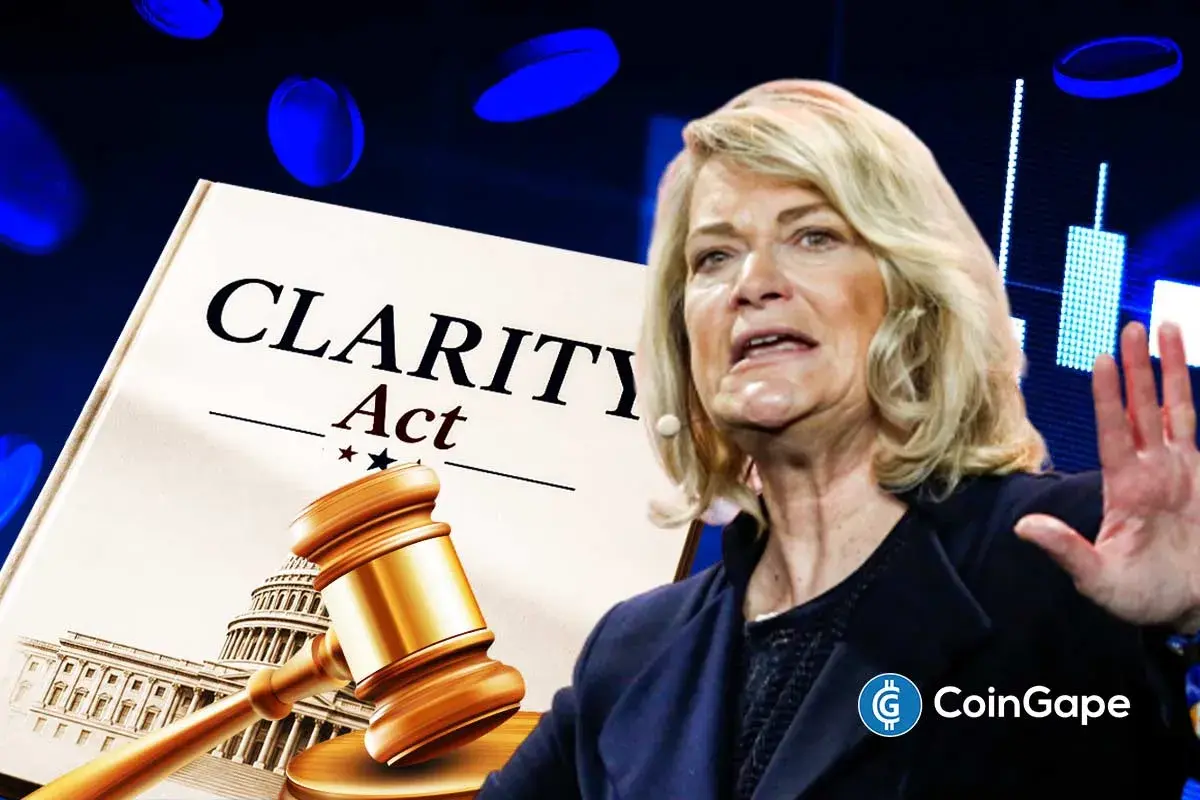
Senator Cynthia Lummis has reissued a warning before the Senate’s September 15 vote on the CLARITY Act. Lummis, in a post on X, said that denying the bill means consumers would not have stronger federal protection. She wrote, “If the Clarity Act fails, Democrats own what comes next.”
Here, she’s pointing to over 100 changes to the bill controlled by Democrats. Lummis also cautioned that if lawmakers don’t approve the measure, there would be “zero federal protection” and “no disclosure rules.” She concluded, “They wrote the fix. They must pass it” as she aims to intensify pressure ahead of Tuesday’s vote.
CLARITY Act: Banks Split Over Stablecoin Yield as Coinbase Makes Big Move
Wintermute policy chief Ron Hammond spoke with Tony Edward about increasing bifurcation within the banking sector on yield and the CLARITY Act. For community banks and credit unions, the deal between Coinbase and Move might be a “chess move,” said Hammond.
https://t witter.com/i/status/2098807302086160687
He added, “We’ve seen a split in the banks, which is really interesting on the lobbying side.” Moreover, he stated, “Goldman Sachs, they’re part of these bank associations, but they even came out against their bank associations and said, ‘Actually, no, we’re for the CLARITY Act.’”
Hammond further added, “community banks have a lot better political apparatus with them,” ahead of Tuesday’s Senate action.
Tyler Williams Says CLARITY Act Is “On the Precipice” of Becoming Law
The CLARITY Act could be closer to becoming law than ever, according to crypto policy insider Tyler Williams. In an interview with Kyle Chassé, Williams stated this bill is “on the precipice of this becoming law.” He did note, however, that the Sept. 15 vote is a procedural vote and not a vote on whether the bill is changed or not.
A lot of people are going to watch Tuesday's CLARITY Act vote without understanding what they're actually watching.
That's because Tuesday isn't simply a vote on whether the Senate likes or dislikes the bill.
Tyler Williams, a crypto policy insider who has worked at the… pic.twitter.com/ch0tEp2ZQY
— Kyle Chassé 🐸 (@Kylechasse) September 12, 2026
“Unless we have a successful procedural vote, we won’t be able to get to the substance of the debate,” Williams said. He told crypto supporters that as legislators are heading back to Washington, they must remind their senators of the significance of the vote.
Crypto Policy Insider Reveals Shocking Twist Ahead of CLARITY Act Senate Vote
The CLARITY Act’s September 15 Senate vote could carry a surprising procedural twist. Senators aren’t just deciding whether or not to approve or disapprove the legislation, said Crypto policy expert Tyler Williams. The first is a cloture vote that would need 60 senators to approve moving the legislation.
A lot of people are going to watch Tuesday's CLARITY Act vote without understanding what they're actually watching.
That's because Tuesday isn't simply a vote on whether the Senate likes or dislikes the bill.
Tyler Williams, a crypto policy insider who has worked at the… pic.twitter.com/ch0tEp2ZQY
— Kyle Chassé 🐸 (@Kylechasse) September 12, 2026
Those who do not like parts of the bill might have to approve the bill if they wish to have the Senate debate those parts and consider amendments. If cloture is approved, Senators can debate the bill, make amendments, and start to consider actual decisions. If it doesn’t, the process can’t proceed the same way.


- Arthur Hayes Cashes Out $22M ETH, ENA & UNI Portfolio, Here’s Why
- Franklin Templeton Adds $150M in sgBENJI Shares to XRP Ledger
- XRP Ledger Holder Count Reaches All-Time High of 8.24 Million Amid Price Weakness Near $1.30
- Crypto Exchange HTX Joins Bitget and MEXC in Restricting Services for Russian Users
- Argentine Judge Clears President Javier Milei of Fraud in LIBRA Meme Coin Scandal
- What’s Next for SpaceX Stock Price as $40B Debt Deal Faces Headwinds After Global AI Rout
- Top Reasons Behind the Bitcoin Price Crash Below $80K
- Pi Network Price Prediction as Major Desktop Upgrade Rolls Out – Will PI Hold $0.078?
- Cardano Price Outlook as Dijkstra Testnet and Node 11.2 Advance Protocol Upgrade
- XRP Price Forecast as Whale Selling Pressure Outweighs ETF Inflows – Is a Crash to $1 Imminent?
- Bitcoin Price Prediction Ahead of US Midterms: Will BTC Crash Below $70K?