


US-Iran War Pushes Oil Reserves to 43-Year Low, Smart Money Turning to Bitcoin?


Highlights
- The US SPR dropped to 311 million barrels, its lowest since March 1983, as the Iran conflict drains the country's energy buffer.
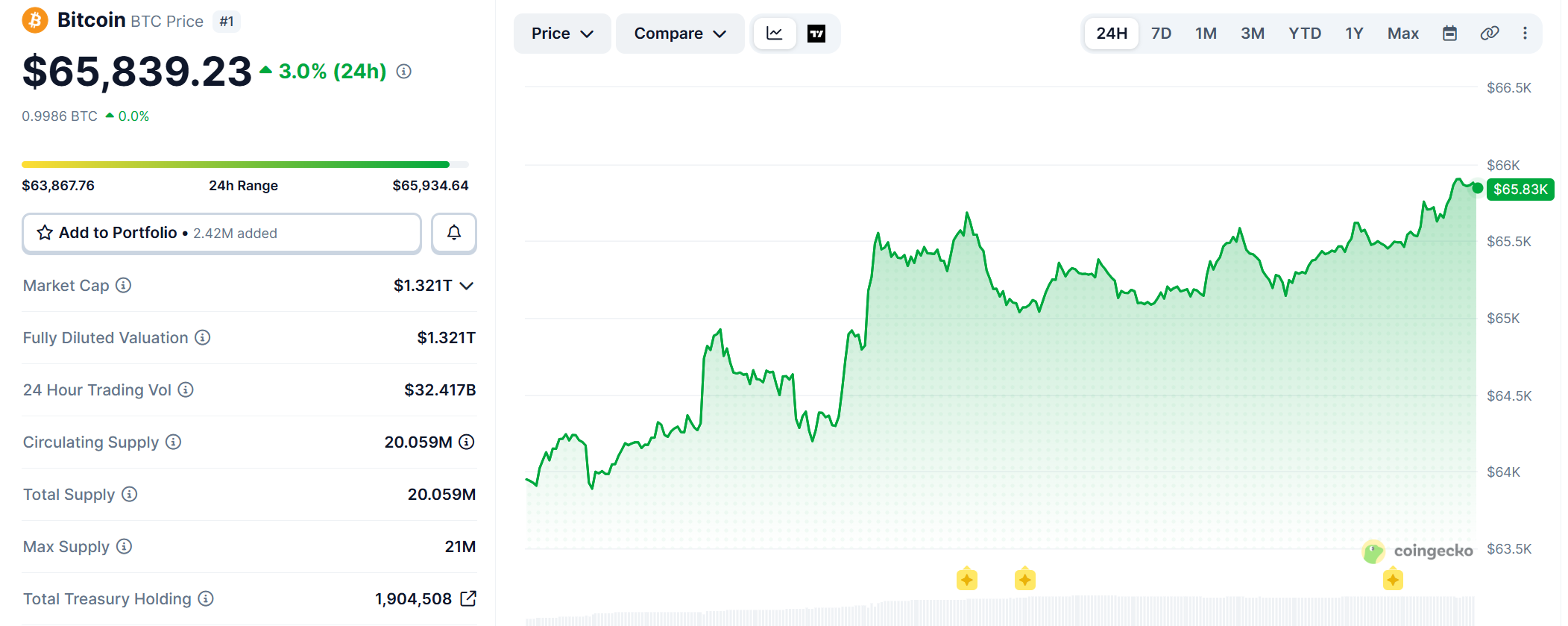
- Brent crude topped $91 and gas passed $4 a gallon, pressuring risk assets with Bitcoin trading near $65,800.
- With the reserve at a four-decade low, a fixed-supply asset like Bitcoin gains traction as a hedge against energy-driven inflation.
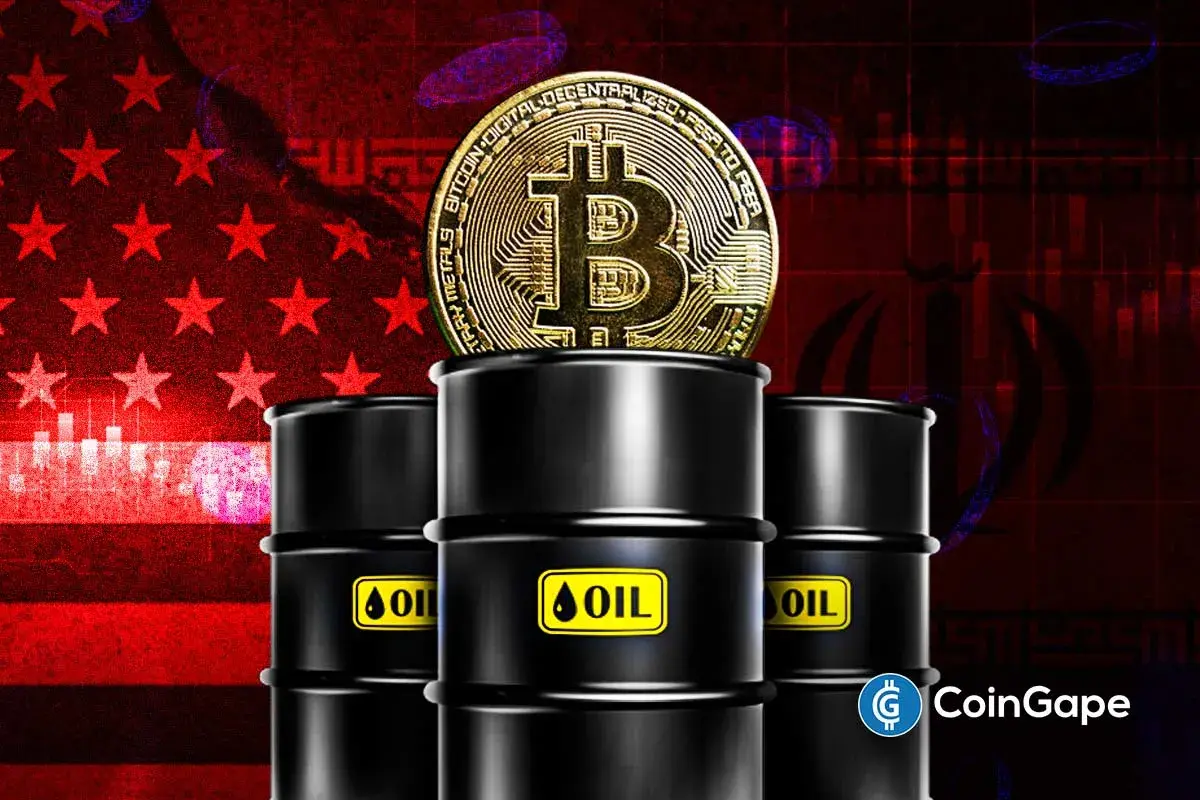
America’s Strategic Petroleum Reserve (SPR) has plunged to 311 million barrels, its lowest point since March 1983, as the U.S.-Iran conflict drains the country’s last major energy buffer. The U.S. Energy Information Administration (EIA) confirmed the reserve shed another 5.1 million barrels in a single week, deepening a 49% volume loss over five years.


Iran Conflict Strips the U.S. of Its Energy Shock Absorber
The SPR was built as a firewall against exactly this kind of crisis. It now holds less crude than at any point during the Reagan administration.
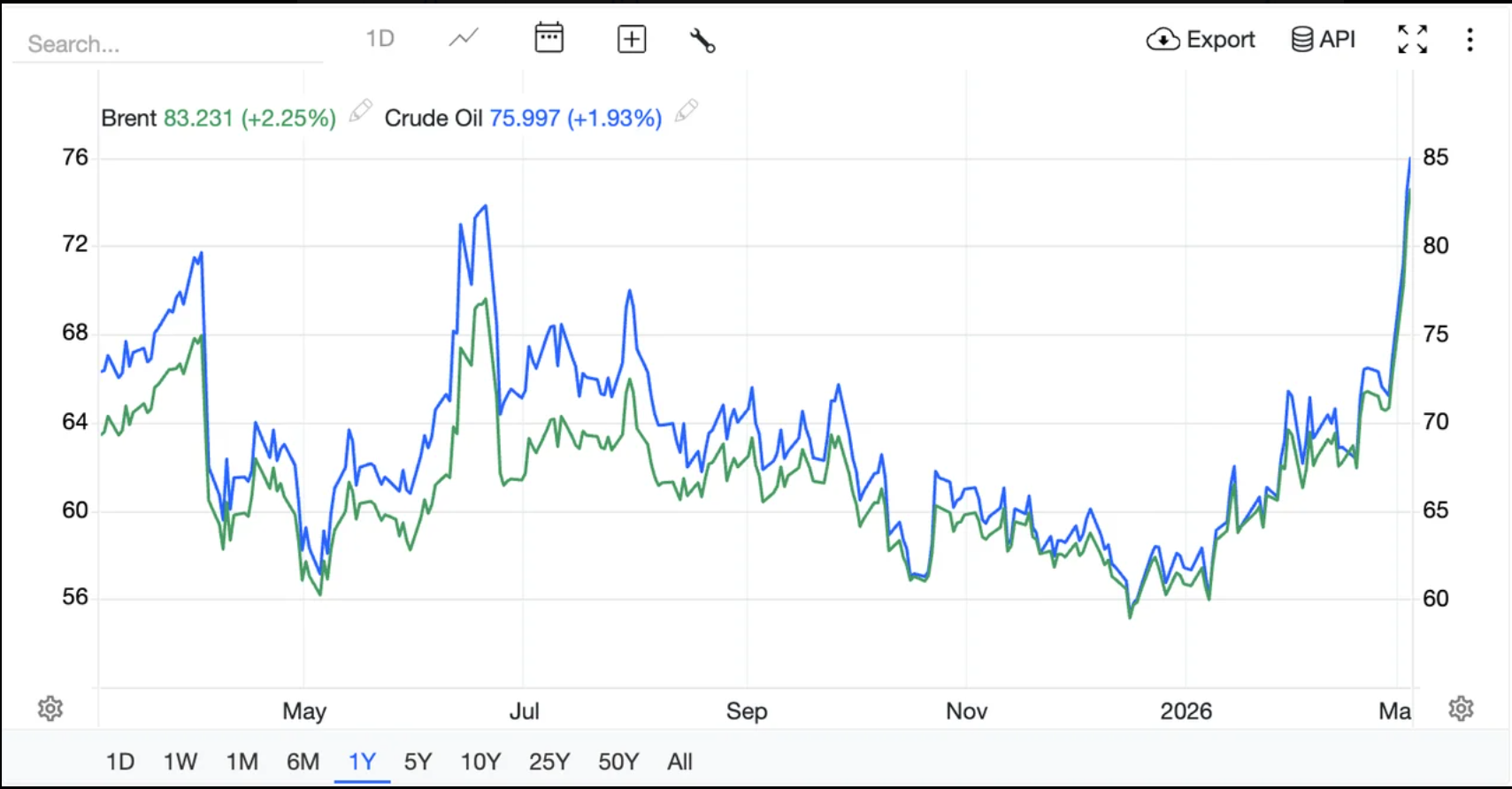
With Brent crude briefly topping $91 and gas prices climbing back above $4 per gallon, the macro pressure on risk assets is intensifying, and Bitcoin is squarely in the crosshairs.
The drawdown began in earnest on March 11, when the Trump administration committed 172 million barrels to offset supply disruptions tied to the Iran conflict that erupted on February 28.
That single release, the largest coordinated SPR action in U.S. history, was part of a broader 400-million-barrel IEA effort spanning 32 member nations.
Iran’s Islamic Revolutionary Guard Corps (IRGC) has repeatedly targeted shipping in the Strait of Hormuz, the chokepoint through which roughly one-fifth of the world’s oil supply transits daily.
Claims of tanker explosions in the strait pushed Brent crude to $91.40 per barrel, its highest reading since June 11.
As CoinGape reported, Iran escalated fresh attacks on Gulf allies, triggering a 4% single-session surge in oil prices that rattled global markets.
Separately, CoinGape’s coverage of IRGC strikes across the Middle East showed oil jumping 5% in a single session, with gold and Bitcoin both selling off under the macro pressure.
The reserve’s statutory minimum stands at 252.4 million barrels. At 311 million and falling, the U.S. retains roughly 59 million barrels of buffer before hitting that legal floor, thin cover for a conflict with no clear end date.
Energy Secretary Chris Wright estimated refilling the SPR to capacity could cost $20 billion and take years, even before the latest drawdowns accelerated the timeline.
Iraq, one of the region’s major producers, has already begun rerouting crude through an $18 billion Jordan pipeline to reduce Hormuz exposure.
CoinGape’s reporting on Iraq diversifying exports amid Hormuz risks underscores how permanent the supply-route rethink has become among regional players, a shift that keeps energy premiums structurally elevated.


Bitcoin Under Pressure Now, But the Macro Case Is Building
Higher oil prices feed directly into inflation. Inflation complicates the Federal Reserve’s rate path. And a hawkish-leaning Fed is historically unfriendly to risk assets, including Bitcoin.
The pattern has played out repeatedly over the past several months.
CoinGape’s Bitcoin price outlook as the U.S.-Iran conflict pushed BTC below $63.1K captured the dynamic in real time, ETF inflows remained steady, but macro headlines overrode technical support.
Similarly, it was reported Bitcoin falling to $63K lows after new U.S. strikes on Iran, showing how geopolitical escalations continue to set the short-term price agenda.
BTC is currently trading a litle above $65,800, up by roughly 3% on the day, with a market cap of approximately $1.27 trillion.
The Coin Bureau flagged the SPR milestone directly on X on July 21, noting that a government able to hold Bitcoin as a reserve asset can deploy it without physically destroying it, a structural advantage over crude oil that carries long-term implications for sovereign reserve strategy.
🚨JUST IN: U.S. strategic oil reserves have fallen to their lowest level in 43 years.
With the oil reserves falling to their lowest level in 4 decades, the national average price for regular gasoline has climbed back above $4 per gallon as the conflict with Iran continues to… pic.twitter.com/GlmZCcDZyJ
— Coin Bureau (@coinbureau) July 21, 2026
With the SPR at a four-decade low, a fixed-supply asset like Bitcoin gains narrative relevance as a hedge against both energy-driven inflation and the erosion of traditional government reserves.
Patient institutional capital monitoring this setup may view current dips as an asymmetric entry point, not a reason to exit.
The next data point to watch is the EIA’s weekly petroleum status report. Any further SPR drawdown, or a renewed Hormuz escalation, could reignite the oil-to-crypto correlation trade that has defined market behavior through much of 2026.
Compare the top cloud mining platforms by contract terms and payout reliability.
Instant Currency Exchange at BestChange with Ease
- Compare Rates Across 1000+ Exchanges
- Access 250+ Cryptocurrencies & Pairs
- Save Time with Real-Time Price Tracking
- Trusted & Verified Exchange Listings

Why Trust CoinGape
CoinGape has covered the cryptocurrency industry since 2017, aiming to provide informative insights Read more… to our readers. Our journal analysts bring years of experience in market analysis and blockchain technology to ensure factual accuracy and balanced reporting. By following our Editorial Policy, our writers verify every source, fact-check each story, rely on reputable sources, and attribute quotes and media correctly. We also follow a rigorous Review Methodology when evaluating exchanges and tools. From emerging blockchain projects and coin launches to industry events and technical developments, we cover all facets of the digital asset space with unwavering commitment to timely, relevant information.



Delivered every day.
- Insights that move markets
- 100,000 active subscribers

Global ONCHAIN AWARDS 2026