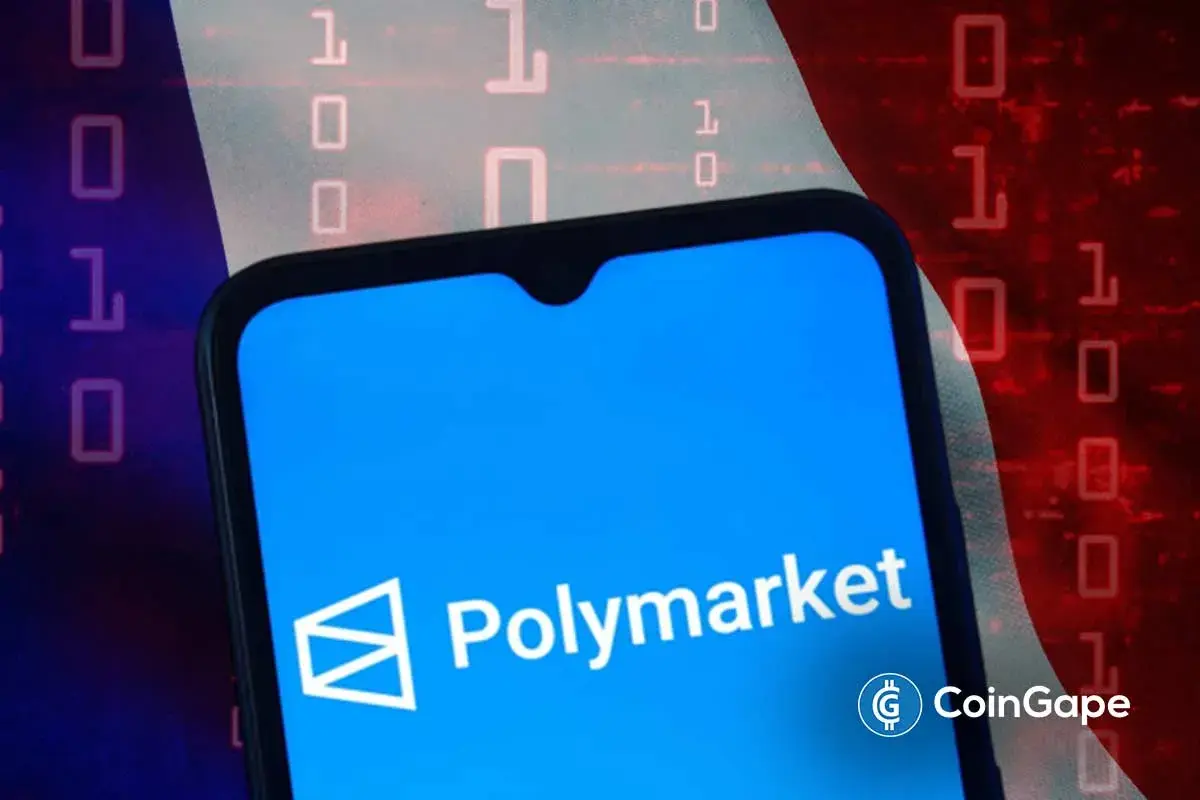
Polymarket Unveils Protocol V2, Targets Nov. 2 Switch to a Single pUSD Market



Highlights
- Polymarket Protocol V2 replaces its stacked 2019 Gnosis CTF adapters with a single ERC-1155 PositionManager, with a tentative Nov 2 cutover for new markets.
- The rewrite adds pUSD as sole collateral (wrapping USDC 1:1) and an OracleAggregator pairing Chainlink and UMA for pluggable resolution.
- The upgrade targets professional market makers as Kalshi leads on volume (~$17.6M vs Polymarket's $12.3M in 24h) and pushes into institutional territory.
Polymarket Protocol V2 is here. Polymarket has unveiled a ground-up rewrite of the smart contracts that power its prediction markets.
Rajath Alex, the platform’s Head of Protocol, announced the upgrade on October 5 via X (formerly Twitter). He set a tentative November 2 deadline for new markets to move onto the rebuilt system.
The platform has run on Gnosis Conditional Tokens Framework (CTF) code since 2019. Alex noted that every new market type added over the years required a separate adapter contract on top of that aging base.
Each layer meant one more approval, one more integration cost, and one more contract that could not be changed once deployed.


What Polymarket Protocol V2 Actually Changes
V2 replaces the stacked adapters with a single ERC-1155 position contract called PositionManager.
Each position ID now encodes the market type, market, and outcome in one place. That means fewer moving parts for users and market makers alike.
The prediction market platform has grown into a high-stakes venue. It recently secured Polymarket’s CFTC order to operate as a U.S. exchange, a milestone that raised the bar for how its settlement infrastructure must perform. A stack built in 2019 simply could not keep pace.
The upgrade also introduces pUSD as the sole V2 collateral. It wraps USDC and USDC.e at a 1:1 ratio.
One exchange contract (ExchangeV3) and one router now handle splits, merges, and redemptions across all market types. Fewer approvals. Less friction.
On the oracle side, V2 ships an OracleAggregator that makes resolution pluggable. Chainlink and UMA are the first two sources.
Chainlink’s prediction-market oracle push already settled over $7 billion in Polymarket volume, and V2 formalizes that dual-oracle book rather than building from scratch. UMA handles optimistic resolution; Chainlink provides faster finality where it already has a price feed.


Timeline, Competition, and What Stays the Same
Canary markets are already live in production, running from October 5 through October 30.
The Data API v1 retires on October 24. Developers must migrate to the Rust-based Data API v2 by that date. The Polymarket Protocol V2 cutover for net-new markets is penciled in for November 2. Alex called that date tentative.
Existing CTF markets, positions, and balances are not touched. V2 is a separate ledger. App users will only see new approval prompts when they first interact with a V2 market.
The timing is deliberate. On the same day Rajath Alex posted his announcement, Kalshi won CFTC approval for S&P 500 perpetual futures. That is a direct move into institutional territory.
A unified collateral layer and a single router make it easier for professional market makers to run positions on Polymarket at scale, exactly the audience Kalshi is now chasing.
According to CoinGape’s prediction-market screener, Kalshi posts roughly $17.6 million in 24-hour volume against Polymarket’s $12.3 million. The gap is real. V2 is how Polymarket answers it.
Still, the CFTC’s broader Polymarket probe has not been resolved. pUSD is the only new collateral, and old markets will not migrate, meaning liquidity splits across two stacks through the cutover window.
The November 2 date can slip. Those are the risks that follow an otherwise strong infrastructure play.
Meanwhile, Polymarket Protocol V2 could reshape how macro contracts are traded on the platform. The October Fed rate contract is already splitting 50/50.
Faster oracle resolution and lower integration costs may attract the market makers needed to tighten spreads on high-stakes contracts like that one.
The Polymarket Protocol V2 announcement, full migration documentation, and contract code are publicly available on the Polymarket Developers X account and the project’s GitHub repository.
Instant Currency Exchange at BestChange with Ease
- Compare Rates Across 1000+ Exchanges
- Access 250+ Cryptocurrencies & Pairs
- Save Time with Real-Time Price Tracking
- Trusted & Verified Exchange Listings

Why Trust CoinGape
CoinGape has covered the cryptocurrency industry since 2017, aiming to provide informative insights Read more… to our readers. Our journal analysts bring years of experience in market analysis and blockchain technology to ensure factual accuracy and balanced reporting. By following our Editorial Policy, our writers verify every source, fact-check each story, rely on reputable sources, and attribute quotes and media correctly. We also follow a rigorous Review Methodology when evaluating exchanges and tools. From emerging blockchain projects and coin launches to industry events and technical developments, we cover all facets of the digital asset space with unwavering commitment to timely, relevant information.



Delivered every day.
- Insights that move markets
- 100,000 active subscribers

CRYPTO IMPACT AWARDS 2026