Venezuela Crypto Adoption at Peak: Stablecoins Run Shops and Salaries



Highlights
- Venezuela’s economic collapse and 70% currency devaluation have pushed crypto adoption in the country.
- Stablecoins like Tether and other cryptocurrencies have become citizens' survival tools.
- From local shops to school, crypto adoption is deeply rooted in the Venezuelan society.
The increasing adoption rate of crypto is undeniable, turning it into a $4 trillion industry, driven by the U.S., Venezuela, and many other nations. Notably, today, crypto has become a survival tool for the citizens of Venezuela battling the economic crash.


Venezuela Crypto Adoption Booms With Stablecoins as a Survival Tool
Venezuela, a country in South America, is in a state of severe collapse, crashing its native currencies’ valuation by 70%. A decade of mismanagement and poor monetary policies has resulted in hyperinflation and currency devaluation, but the same has pushed the citizens of Venezuela to crypto adoption.
Last year alone, it ranked 13th globally in terms of adoption after a 110% surge according to the Chainalysis Crypto Adoption Index.

- Source: Chainalysis Crypto Adoption Index
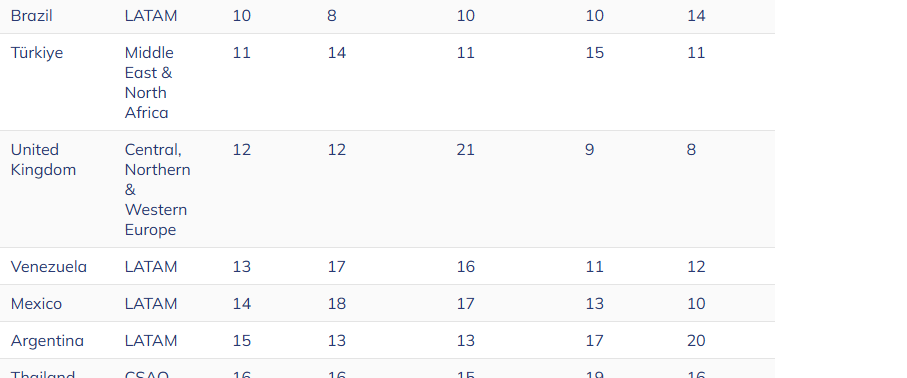
Now, in 2025, cryptocurrency has turned into a core part of this country’s economy, as citizens actively use crypto to battle the collapse of the bolívar and the government’s control.
Even in this, stablecoins like Tether (USDT) priced ∼$1 (pegged to the U.S. dollar) have become a medium of daily payment activities.


Stablecoins For Daily Use
Crypto adoption in Venezuela is visible on every street, from small family shops to even big retail businesses. Everyone in the country is now actively accepting crypto payments with popular modes of transactions like Binance and Airtm.
Victor Sousa, a shopper, told the media that they actively use USDT for shopping and plan to put their savings in crypto, considering the conditions of the paper money. Cointelegraph reports also suggest that many companies/ businesses are paying their employees with stablecoins like Tether.
Another prominent form of adoption is that Venezuelan universities offer crypto courses. Economist Aarón Olmos explains that people are choosing crypto as Venezuela faces high inflation, low wages, and difficulty opening bank accounts. For them, crypto isn’t a luxury; it’s a necessity to survive.
While the Venezuelan government has also shown mixed signals on crypto, citizens have acted on their own. Back in 2018, the country launched its own crypto, but that failed by 2023. There was also a discussion on Venezuela setting a Bitcoin Reserve, but no updates have been reported since then.
Additional inconsistencies pushed people to rely on decentralized options, such as cryptocurrency.
Frequently Asked Questions (FAQs)
1. Why is Venezuela turning to crypto?
2. Where are stablecoins being used in Venezuela?
3. What’s the Venezuelan government’s take on crypto?
Why Trust CoinGape
CoinGape has covered the cryptocurrency industry since 2017, aiming to provide informative insights Read more…to our readers. Our journal analysts bring years of experience in market analysis and blockchain technology to ensure factual accuracy and balanced reporting. By following our Editorial Policy, our writers verify every source, fact-check each story, rely on reputable sources, and attribute quotes and media correctly. We also follow a rigorous Review Methodology when evaluating exchanges and tools. From emerging blockchain projects and coin launches to industry events and technical developments, we cover all facets of the digital asset space with unwavering commitment to timely, relevant information.



Delivered every day.
- Insights that move markets
- 100,000 active subscribers





- Chainalysis AI Compresses $387M Bitget Trace From 20 Hours of Bridge Work to Under 10 Minutes
- XRP News: Ripple Ally Network Expands as XRP Asia Debuts With Seoul Banking Showcase
- CLARITY Act Failure Hands Coinbase a Stablecoin Reward Edge, Bitwise CIO Says
- AAVE Price Jumps 8% as Aave Moves to Put Protocol IP Under DAO Control
- XRP Price Set To Outperform Bitcoin, Ethereum With 2000% Rally: Analyst
- PUMP Coin Price Surges 15% as Whales Accumulate: How High Can PUMP Go?
- Shiba Inu Price Eyes Recovery as Burn Rate Soars 17,134% in 24 Hours
- BNB Price Prediction Ahead of 37th Quarterly Token Burn in Mild October
- Pi Network Price Prediction as PI Partners with OpenUSD for Pioneer Rewards, Expanded Utility
- Why Is the Crypto Market Down Today?
- COIN and CRCL Stock Outlook as ICBA Sues OCC For Issuing Bank Charters to Crypto Companies