
Elon Musk Predicts SpaceX AI Could Reach Fable, OpenAI’s GPT-6 Level Within Months


Highlights
- Elon Musk expects SpaceX AI to reach Fable and GPT-6-level performance within two to three months.
- Musk also sees SpaceX reaching AI “pole position” in about six months if development continues.
- SpaceX is expanding AI compute efforts while Google prepares an orbital TPU test aboard Falcon 9.
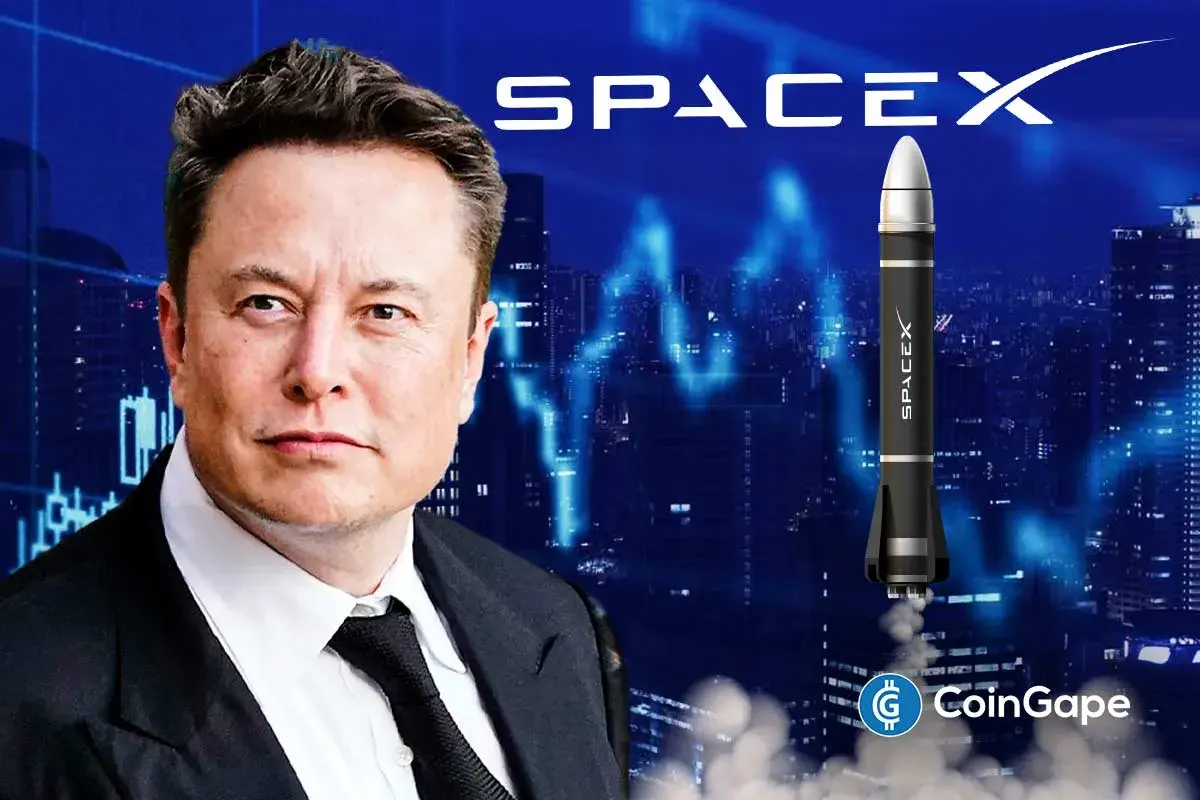
In just two to three months, Elon Musk believes SpaceX can create an AI model similar to Fable and OpenAI’s GPT-6. The forecast comes as the company pushes its recently acquired xAI business deeper into competition with leading frontier AI developers.


Elon Musk Targets Fable and GPT-6 Performance in 3 Months
According to an X post, Elon Musk noted he was “cautiously optimistic” that he will be able to hit Fable and GPT-6-level performance within “two to three months” of the new model. The comment followed criticism of the recently released Grok 4.7 model.
He also insisted that SpaceX’s AI venture is still a younger competitor than the primary rivals in the space. Musk said it has been three years in development, compared to six for Anthropic and 10 years for OpenAI.
“Within the next six months or so, SpaceX should be in what I would consider to be AI’s ‘pole position,’” Musk said. That timeline remains a forecast and depends on future model development and testing.
The prediction arrives as OpenAI and Anthropic continue releasing new frontier models while facing pressure from cheaper alternatives. Competition has also risen from the Chinese developers with their competitive models at lower prices.


SpaceX Pushes Deeper Into AI After xAI Acquisition
SpaceX acquired xAI in February, bringing Grok, X, and the AI company’s computing operations under the rocket maker. The combination placed Musk’s artificial intelligence and space infrastructure businesses inside one company.
That configuration provides SpaceX with direct access to AI model development and the expensive infrastructure needed to train and run AI systems. Computing capacity has been one of the critical limitations in the industry that Musk has mentioned several times.
SpaceX has already been extending its terrestrial AI network and is also selling out computer power for outside developers. Its longer-term plans go further by linking artificial intelligence with Starship and orbital data centers.
Musk has argued that SpaceX’s hardware experience could become an advantage as AI developers require more power and computing capacity. That may mean more robust models in the future, depending on benchmark results.
Musk Links AI Race to Computing in Space
Elon Musk’s model forecast comes as he places greater emphasis on moving AI computing infrastructure into orbit. On Thursday, he wrote that space-based systems could eventually account for nearly all computing capacity.
Meanwhile, Google is going in a similar direction with Project Suncatcher, a test of AI hardware in low Earth orbit. The company plans to launch its first TPU-equipped prototype aboard a SpaceX Falcon 9 on October 1.
The experiment will test processor performance, power systems, and cooling conditions in space. Google describes the project as early research rather than a commercial orbital data center.
Amid this forecast, SpaceX shares were trading around $147.91 in Thursday premarket trading, down about 0.3% after closing Wednesday at $148.36. As we reported, the stock had fallen 4.1% recently as investors prepared for roughly 328 million shares to become eligible for trading soon.
Instant Currency Exchange at BestChange with Ease
- Compare Rates Across 1000+ Exchanges
- Access 250+ Cryptocurrencies & Pairs
- Save Time with Real-Time Price Tracking
- Trusted & Verified Exchange Listings

Why Trust CoinGape
CoinGape has covered the cryptocurrency industry since 2017, aiming to provide informative insights Read more… to our readers. Our journal analysts bring years of experience in market analysis and blockchain technology to ensure factual accuracy and balanced reporting. By following our Editorial Policy, our writers verify every source, fact-check each story, rely on reputable sources, and attribute quotes and media correctly. We also follow a rigorous Review Methodology when evaluating exchanges and tools. From emerging blockchain projects and coin launches to industry events and technical developments, we cover all facets of the digital asset space with unwavering commitment to timely, relevant information.



Delivered every day.
- Insights that move markets
- 100,000 active subscribers

Global ONCHAIN AWARDS 2026